ExhibitionNovember 4, 2016
"The Four Actions," Colectivo Estética Unisex
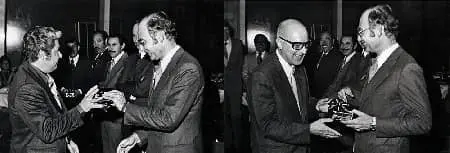
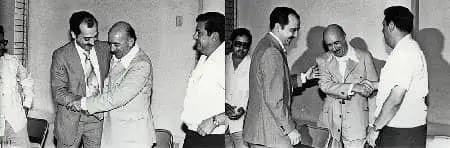
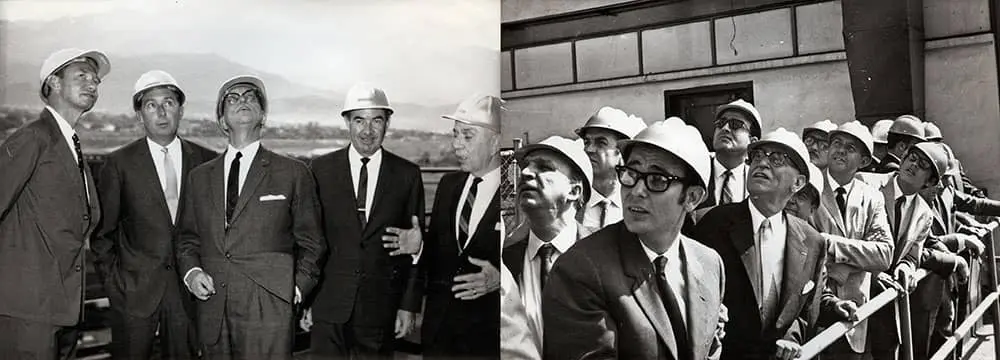
The disappearance of Fundidora Monterrey marked a milestone in the history of contemporary Mexico. Founded in1900, the organization was for many years a paradigm of the iron and steel industry in the north of the country. Turned into a public company in 1977, it was eventually declared bankrupted and was closed in 1986. Based on initiatives generated in 1989 to transform it into a cultural and recreational center, it reopened to the public in 2001 and declared a Museo de Sitio de Arqueología Industrial [Industrial Archeological Site Museum] that also housed the Historic Archive of Fundidora. It is based on this archive that the Colectivo Estética Unisex—formed by Colombian artist Futuro Moncada and Mexican artist Lorena Estrada-Quiroga—performed an investigation of its cultural heritage in order to select, organize and classify it to develop the highly ambitious work titled Fundidora S.A. Ciudad Invisible (Foundry Inc. Invisible City), conceived as a model to examine and criticize the general guidelines and approaches that defined the ethic and aesthetic of Ibero American capitalism. A selection of a number of photographs from the archive were arranged into four different categories that reflected the actions alluded to in the title of the installation and that broadly described the characteristics of social interaction and power relations among the political, business, and working classes that defined the company during the 1970s, when it was rescued by the government. According to what the artists were able to discover in the photographic documents, "The Four Actions" were: 1) Ascend/Descend, 2) Look/Point, 3) Greet, and 4) Give/Receive. According to the description by curator Jesús Ramírez-Limón, these four actions "Show codes of behavior that are beyond the control of the discourse and reveal ideals by the protagonists appearing in the images." The four actions are illustrated in the video installation, where—depending on the action—two images are juxtaposed of persons going up or down the stairs, persons looking at what somebody else points at, persons exchanging presents and recognitions, or persons shaking hands with others in more less official greetings. Similar to the resources used by media agencies to produce company videos, the video installation lists the already mentioned social behaviors in an act that is at once redemptive and revealing. It becomes a formal catalog of compositional gestures, indications, and tensions that mimic (even replace) the narrative derived from Mexican muralism. This cannot be described as a form of mannerism that if halfway doctrine and halfway propaganda that sells from patriotic ideals to house products. Besides the video installation, there are four templates with four counterpointing images illustrating the four actions. The public is invited by the museum staff to take these images or documents with them, as an action that serves as physical and moral extension of the archive. These impressions become part of new archives or they simply are scattered outside of the museum to fulfill other purposes (greater of smaller). Museo de Arte Carrillo Gil, 19 de agosto a 13 de noviembre de 2016
Gallery