ExhibitionDecember 18, 2018
Invention of Origin at Pinacoteca de São Paulo
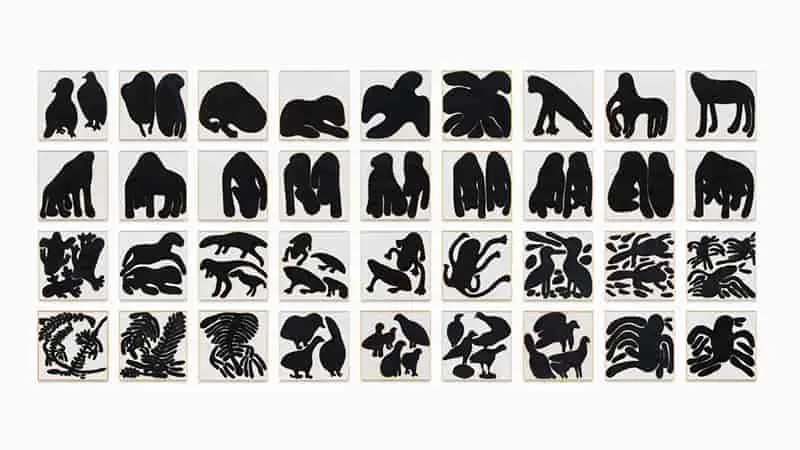
The Pinacoteca de São Paulo present until February 11th, 2019, the exhibition Invention of Origin. With curatorship by Pinacoteca's Nucleus of Research and Criticism and under general coordination of José Augusto Ribeiro, the museum curator, the group exhibition takes as the starting point the film The Origin of the Night: Amazon Cosmos (1973-77), by the German artist Lothar Baumgarten. The film has never been released in Brazil and will be presented alongside a selection of works by four Brazilian artists — Antonio Dias, Carmela Gross, Solange Pessoa and Tunga. In common, the selected works allude to primordial times and actions which could have contributed to the narratives about the origin of life. Shot on 16 mm between 1973 and 1977, The Origin of the Night: Amazon Cosmos, by Lothar Baumgarten, is based on a Tupi myth, registered by the French anthropologist Claude Lévi-Strauss, on the origin of the night — which, according to the narrative, used to "sleep" under waters, when animals still did not exist and things had the power of speech. From the issues presented in the film, the curatorial research focused on a very specific part of Brazilian production, which comprises about 40 works by five artists, including video, painting, sculpture etc., produced from the 1970s to today. In the first exhibition room, where is also the film by Lothar Baumgarten, the visitor encounters two works by Carmela Gross: Facas [Knives] and 300 larvas [300 larvae], both from 1994. For Invention of Origin, the curatorship brought together 500 of the approximately 1000 pieces (elementary forms of knives) which make up the first one. The artist's operation for the work anticipated the change from one knife model to another every time she considered she had acquired the ability to make that modeling. From the production of Antonio Dias, deceased in August this year, the works selected belong to a specific period, which extends from 1977 to the mid-1990s. In this period, Dias travels to Nepal, where, with local craftsmen, he learns the manufacturing of handmade papers and develops dyeing techniques for paper sheets with natural elements (earth, ashes, vegetables etc.). In the same room, there is a set of pieces by Tunga, produced between 1980 and the mid-2010s. Some of them are taken as the most famous works by the artist (Tacape [Club], Escalpo [Scalp], Tranças [Braids]) and other recent ones, which were not widely exhibited in public spaces. Finally, in the last room of the exhibition, Pinacoteca presents a work still in process by the artist from Minas Gerais Solange Pessoa. The installation, conceived between 2004 and 2018, consists of a 10-meter long sculpture, made with feathers from birds and tissue, pending from the ceiling in a conic form, remembering a tree's torso.