BiennialJune 4, 2021
Fundação Bienal de São Paulo announces the complete list of artists participating in the 34th Bienal de São Paulo and releases its first digital catalog
On May 27th, the Fundação Bienal de São Paulo announced the complete list of artists participating in the 34th Bienal – Faz Escuro mas eu canto [Though It’s Dark, Still I Sing], consisting of 91 names (including two duos and one artist collective) from 39 countries.
Thematically, the 34th Bienal emphasizes the poetics of “relation” as a curatorial tool and principle for uniting the city’s cultural institutions. This edition, begun in February 2020, has been unfolding in space and in time with both physical and online programming and will culminate in the group show that will occupy the entire Ciccillo Matarazzo Pavilion starting in September 2021, concomitantly with dozens of solo exhibitions at partner institutions in the city of São Paulo.
Among this edition’s participating artists, there are representatives from all continents. This edition will have a significant representation of indigenous artists.
Jacopo Crivelli Visconti, the 34th Bienal’s chief curator, comments on the process of constructing the list of invited artists: “Since its conception, and with an even greater sense of urgency after the developments in recent months, the 34th Bienal seeks to establish bridges between artworks and artists that reflect multiple cosmovisions, cultures and historical moments. The process of putting all of these voices into relation and resonance was intense and stimulating, in keeping with one of the concepts of Édouard Glissant, which greatly inspired us along this path: that we are always talking and writing in the presence of all the world’s languages.”
The complete list of participating artists is available here.
Beyond the opening of the main exhibition of the 34th Bienal de São Paulo, the year 2021 is also an important date for marking the 70th anniversary of the 1st Bienal de São Paulo (1951).
“Throughout the last 70 years, the various editions of the Bienal de São Paulo have adapted to the times, and it is precisely its ability to change, coupled with its opening to the new, which has allowed the show to conserve its artistic and cultural relevance. In some way, the 34th Bienal de São Paulo symbolizes this: faced with challenging times, we have found ways to remain faithful to the proposal of this edition without being bound to ideas and projects that have lost their pertinence in the new global context. Last year, we intensified our digital programming and discovered new ways to connect with the public, which we plan to continue in the next editions.
The launching of the digital catalog tenteio is, without a doubt, one of the initiatives that were not foreseen in the initial plans, but which is in total accordance with them, while also expanding their reach,” says José Olympio da Veiga Pereira, president of the Fundação Bienal de São Paulo.
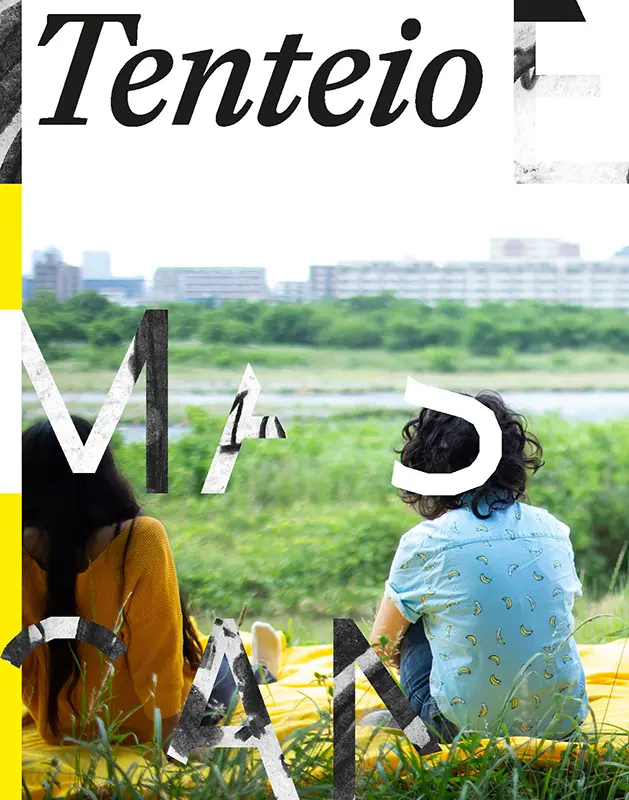
With more than 130 publications throughout its 70-year history, the Fundação Bienal is publishing, for the first time, an entirely digital catalog for this edition of the event. The publication weaves a visual and textual narrative from contributions produced exclusively for this occasion by the 91 artists participating in the 34th Bienal. Based on the drawings, photographs, poems, and texts shared by the artists, Elvira Dyangani Ose (the 34th Bienal’s guest editor, in collaboration with The Showroom – London) and Vitor Cesar (designer and author of this edition’s visual language) have put together a catalog that reflects the poetics of the open rehearsal and of “relation,” guiding principles for the curatorship of this Bienal. Its content will be incorporated into the show’s printed catalog, to be released in September 2021.
Like the exhibition title itself, the catalog’s title, tenteio, is also inspired by the work of the Amazonian poet Thiago de Mello, who is turning 95 years old in 2021. Concerning the choice of the publication’s title, the Bienal’s adjunct curator Paulo Miyada says: “In 1983, Thiago de Mello published Arte e Ciência de Empinar Papagaio [The Art and Science of Kite Flying], an essay about the ancestral practice that, according to him, has evolved to an unequivocal degree among the old and young masters in Manaus. To fly a kite is to play with the wind, dance with the intangible, to take risks with moves like the trança [weave], peleja [battle], relo [cut]. Or the tenteio, which consists of rapidly pulling and releasing the line, making the kite oscillate in the air, testing its weight, suspending movement, deviating the route, and throwing off the opponent.”
The publication can be accessed here.
Thematically, the 34th Bienal emphasizes the poetics of “relation” as a curatorial tool and principle for uniting the city’s cultural institutions. This edition, begun in February 2020, has been unfolding in space and in time with both physical and online programming and will culminate in the group show that will occupy the entire Ciccillo Matarazzo Pavilion starting in September 2021, concomitantly with dozens of solo exhibitions at partner institutions in the city of São Paulo.
Among this edition’s participating artists, there are representatives from all continents. This edition will have a significant representation of indigenous artists.
Jacopo Crivelli Visconti, the 34th Bienal’s chief curator, comments on the process of constructing the list of invited artists: “Since its conception, and with an even greater sense of urgency after the developments in recent months, the 34th Bienal seeks to establish bridges between artworks and artists that reflect multiple cosmovisions, cultures and historical moments. The process of putting all of these voices into relation and resonance was intense and stimulating, in keeping with one of the concepts of Édouard Glissant, which greatly inspired us along this path: that we are always talking and writing in the presence of all the world’s languages.”
The complete list of participating artists is available here.
Beyond the opening of the main exhibition of the 34th Bienal de São Paulo, the year 2021 is also an important date for marking the 70th anniversary of the 1st Bienal de São Paulo (1951).
“Throughout the last 70 years, the various editions of the Bienal de São Paulo have adapted to the times, and it is precisely its ability to change, coupled with its opening to the new, which has allowed the show to conserve its artistic and cultural relevance. In some way, the 34th Bienal de São Paulo symbolizes this: faced with challenging times, we have found ways to remain faithful to the proposal of this edition without being bound to ideas and projects that have lost their pertinence in the new global context. Last year, we intensified our digital programming and discovered new ways to connect with the public, which we plan to continue in the next editions.
The launching of the digital catalog tenteio is, without a doubt, one of the initiatives that were not foreseen in the initial plans, but which is in total accordance with them, while also expanding their reach,” says José Olympio da Veiga Pereira, president of the Fundação Bienal de São Paulo.
With more than 130 publications throughout its 70-year history, the Fundação Bienal is publishing, for the first time, an entirely digital catalog for this edition of the event. The publication weaves a visual and textual narrative from contributions produced exclusively for this occasion by the 91 artists participating in the 34th Bienal. Based on the drawings, photographs, poems, and texts shared by the artists, Elvira Dyangani Ose (the 34th Bienal’s guest editor, in collaboration with The Showroom – London) and Vitor Cesar (designer and author of this edition’s visual language) have put together a catalog that reflects the poetics of the open rehearsal and of “relation,” guiding principles for the curatorship of this Bienal. Its content will be incorporated into the show’s printed catalog, to be released in September 2021.
Like the exhibition title itself, the catalog’s title, tenteio, is also inspired by the work of the Amazonian poet Thiago de Mello, who is turning 95 years old in 2021. Concerning the choice of the publication’s title, the Bienal’s adjunct curator Paulo Miyada says: “In 1983, Thiago de Mello published Arte e Ciência de Empinar Papagaio [The Art and Science of Kite Flying], an essay about the ancestral practice that, according to him, has evolved to an unequivocal degree among the old and young masters in Manaus. To fly a kite is to play with the wind, dance with the intangible, to take risks with moves like the trança [weave], peleja [battle], relo [cut]. Or the tenteio, which consists of rapidly pulling and releasing the line, making the kite oscillate in the air, testing its weight, suspending movement, deviating the route, and throwing off the opponent.”
The publication can be accessed here.