ExhibitionMay 28, 2015
"The Donation by León Ferrari"
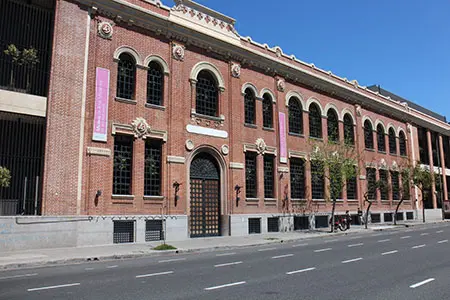
León Ferrari (Argentina, 1920–2013) was like a long distance runner. He tirelessly traveled across a long desert until, at age 86, he was awarded the Golden Lion at the 2007 Venice Biennale. He always stayed the course. Generous and honest, he never exploited the tragedy of his son's abduction and forced disappearance by the Argentine military dictatorship. After his death in November 2013, the MoMA in New York showed two great "writings" by Ferrari as a way of paying homage to the artist. Although Ferrari's artistic career began in the mid-1950s in Rome, and despite the important work that he produced during the 1960s in Buenos Aires, back then, and for a long time, his work was only known to some fellow artists and writers, and only to a few art critics. Beginning in 2000, he began to gain prominence as result of his participation in several exhibitions at the Centro de Arte Reina Sofía, the University of Essex and the Museum of Fine Arts Houston. The controversy raised by an attempt to censor his retrospective at the Centro Cultural Recoleta in 2004, brought him unexpected popular recognition. But in São Paulo, Brazil, where he lived in exile until 1991, he was appreciated earlier. Now, and until August 9, 2015, the Museo de Arte Moderno in Buenos Aires presents "The Donation by León Ferrari," an exhibition that celebrates and examines several facets of his provocative artistic trajectory. As part of a larger project, the museum began a series of facsimile publications of books conceived and designed by Ferrari; the museum will begin work on the first catalogue raisonné of drawings by the artist. The Fundación Augusto y León Ferrari Arte Y Acervo was created in 2008 for the conservation of works and archive of the Ferrari and his father, architect, painter and photographer Augusto César Ferrari. The exhibition gives prominence to the works donated by the Ferrari family, including 72 works on paper from 1964 to 2009: drawings in pencil, ink, pastels, watercolors and acrylics; collages and reproductions intervened with paintings and Braille writing, among others. Ferrari discovers poetry and immerses himself in mysteries and metaphors, explores space and form, traces impossible cities, invents musical instruments, and challenges the institutions that seek to monopolize the "revealed truth." The exhibition is completed with a group of paintings and sculptures that the Ferrari family gave on loan to the museum for five years for study and conservation. Works from the museum's collection were also in the exhibition, including one of Ferrari's most emblematic wire sculptures acquired in 1963. He began working with metals in 1959 and created works that, like a swarm or magical rain of lines, deepen the halo of mystery surrounding the artist, given that they admittedly "serve no ethical purpose." The pieces in this exhibition synthesize the two currents with which Ferrari worked: one predominantly aesthetic, and another with a mostly ethical dimension of great symbolic value and committed to his time, because, as the artist would say, "art can be done with anything, even politics." León Ferrari's "written drawings" mimic traditional writing on paper, newspapers, erotic drawings, religious paintings by the masters, and iconic images from the twentieth century; in the same manner that his collages and interventions with Braille on newspaper clippings explore decadence and the double discourse. Chance does not appear to play a role in the images that Ferrari chose to intervene or in the words he risked writing. Words are insinuated and then dissipate; signs dance and, at moments, are repeated to infinity. They play with the viewer's gaze without offering any respite or guidance.