ExhibitionJuly 7, 2023
Juan de Pareja, Afro-Hispanic Painter.The Metropolitan Museum
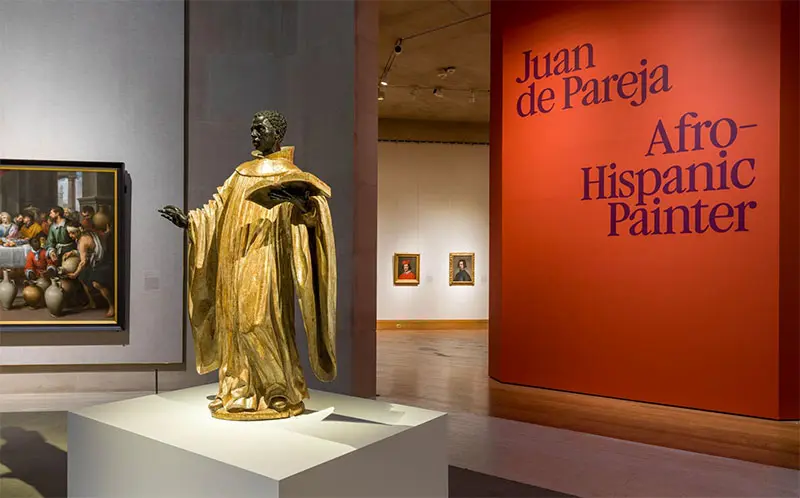
The exhibition Juan de Pareja, Afro-Hispanic Painter offers an unprecedented look at the life and artistic achievements of Juan de Pareja (ca. 1608-1670). While known today as the model for the Metropolitan Museum of Art's iconic portrait of Diego Velázquez, Pareja slaved in Velázquez's studio for more than two decades before becoming an artist in his own right. The exhibition is the first to tell his story and examine the role that the craftsmanship of enslaved people and a multiracial society played in the art and material culture of the so-called "Golden Age" in Spain. This presentation brings together some 40 paintings, sculptures, and decorative art objects, as well as a series of books and historical documents from the Met's holdings and other collections in the United States and Europe.
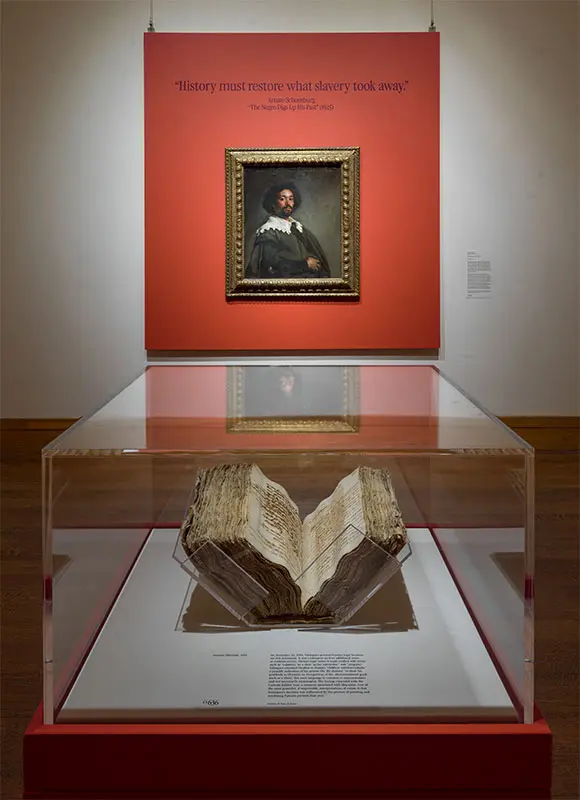
Pareja's story in New York began long before his portrait arrived at the Met. During the 1910s, as part of a larger project of recovering examples of excellence in global black history, Schomburg introduced a new way of understanding Pareja. Schomburg, a black intellectual and collector originally from Puerto Rico who lived in New York, traveled to Europe and spent time in Seville, Granada, and Madrid, where he conducted research that reconstructed the multiracial society of Pareja's time, in which people of African descent played a crucial and unrecognized role. In the first section of the exhibition, Schomburg's work is highlighted through a substantial set of loans from the New York Public Library's Schomburg Center for Research in Black Culture and other sources, including his landmark essay "The Negro Digs Up His Past," photographs from his travels, and several books. A series of quotes from Schomburg emphasize the central role of recovery in rewriting the versions created by official history.
Pareja was born around 1608 in Antequera, Spain, and was probably the son of an enslaved woman of African descent and a white Spaniard. While no available documents from Pareja's life speculate about his family origins or skin color, some archival documents from 17th-century Spain provide ample evidence of a multiracial society where artists and artisans hired enslaved labor. The exhibition's second section shows the traces of enslaved labor often hidden in surviving objects from that era, as seen in polychrome wood carvings and other works of carpentry, silverware, and ceramics. Among the rare depictions of the black and Moorish populations (Spanish Muslims who were forced to convert to Catholicism) is the monumental painting by Francisco de Zurbarán. The three surviving versions of Velázquez's painting of a kitchen maid were brought together for the first time in this exhibition, featuring a person of color as the work's protagonist. This presentation, never before seen in European painting, attests to the growing demand for these images during that period, a demand to which Bartolomé Esteban Murillo would later respond with his painting Tres Muchachos (Three Boys).
The exhibition's third section focuses on Velázquez and Pareja's trip to Italy between 1649 and 1651, where Velázquez painted the portrait of Pareja. The exhibition of this image was a great success and set the stage for Velázquez to create an extraordinary series of portraits that included depictions of friends and the papal court. Velázquez's portrait of Pareja gave the model a peculiar notoriety and raises essential questions about the relationship between a portraitist and his model when one is the legal owner of the other. The trip marked a before and after in Pareja's personal and professional life: his status as an enslaved person granted him exclusive access, against all logic, to monuments of European art that would later serve to develop his artistic voice. Velázquez also signed manumission documents (Archivio di Stato di Roma) in Rome to record his decision to free Pareja four years later, opening the door for Pareja to begin his painting career after returning to Madrid.
The exhibition concludes with Pareja's first compilation of paintings, some of monumental scale, which he produced after his manumission in 1654. He got involved with a group of artists now known as the Madrid School—whose lively palettes and compositions contrasted with Velázquez's refined sobriety; Pareja charted his artistic path rather than returning to the style of his former master. The exhibition includes La vocación de San Mateo, which contains a self-portrait; La Huida a Egipto (The Flight into Egypt); Retrato de José Ratés (Portrait of José Ratés); and El Bautismo de Cristo (The Baptism of Christ). The latter includes a trompe l'oeil-style "carving" of Pareja's name on a stone, the strongest affirmation of his artistic authority. Compiling these works begins a new chapter in the continuing recovery of Pareja's art.
Pareja's story in New York began long before his portrait arrived at the Met. During the 1910s, as part of a larger project of recovering examples of excellence in global black history, Schomburg introduced a new way of understanding Pareja. Schomburg, a black intellectual and collector originally from Puerto Rico who lived in New York, traveled to Europe and spent time in Seville, Granada, and Madrid, where he conducted research that reconstructed the multiracial society of Pareja's time, in which people of African descent played a crucial and unrecognized role. In the first section of the exhibition, Schomburg's work is highlighted through a substantial set of loans from the New York Public Library's Schomburg Center for Research in Black Culture and other sources, including his landmark essay "The Negro Digs Up His Past," photographs from his travels, and several books. A series of quotes from Schomburg emphasize the central role of recovery in rewriting the versions created by official history.
Pareja was born around 1608 in Antequera, Spain, and was probably the son of an enslaved woman of African descent and a white Spaniard. While no available documents from Pareja's life speculate about his family origins or skin color, some archival documents from 17th-century Spain provide ample evidence of a multiracial society where artists and artisans hired enslaved labor. The exhibition's second section shows the traces of enslaved labor often hidden in surviving objects from that era, as seen in polychrome wood carvings and other works of carpentry, silverware, and ceramics. Among the rare depictions of the black and Moorish populations (Spanish Muslims who were forced to convert to Catholicism) is the monumental painting by Francisco de Zurbarán. The three surviving versions of Velázquez's painting of a kitchen maid were brought together for the first time in this exhibition, featuring a person of color as the work's protagonist. This presentation, never before seen in European painting, attests to the growing demand for these images during that period, a demand to which Bartolomé Esteban Murillo would later respond with his painting Tres Muchachos (Three Boys).
The exhibition's third section focuses on Velázquez and Pareja's trip to Italy between 1649 and 1651, where Velázquez painted the portrait of Pareja. The exhibition of this image was a great success and set the stage for Velázquez to create an extraordinary series of portraits that included depictions of friends and the papal court. Velázquez's portrait of Pareja gave the model a peculiar notoriety and raises essential questions about the relationship between a portraitist and his model when one is the legal owner of the other. The trip marked a before and after in Pareja's personal and professional life: his status as an enslaved person granted him exclusive access, against all logic, to monuments of European art that would later serve to develop his artistic voice. Velázquez also signed manumission documents (Archivio di Stato di Roma) in Rome to record his decision to free Pareja four years later, opening the door for Pareja to begin his painting career after returning to Madrid.
The exhibition concludes with Pareja's first compilation of paintings, some of monumental scale, which he produced after his manumission in 1654. He got involved with a group of artists now known as the Madrid School—whose lively palettes and compositions contrasted with Velázquez's refined sobriety; Pareja charted his artistic path rather than returning to the style of his former master. The exhibition includes La vocación de San Mateo, which contains a self-portrait; La Huida a Egipto (The Flight into Egypt); Retrato de José Ratés (Portrait of José Ratés); and El Bautismo de Cristo (The Baptism of Christ). The latter includes a trompe l'oeil-style "carving" of Pareja's name on a stone, the strongest affirmation of his artistic authority. Compiling these works begins a new chapter in the continuing recovery of Pareja's art.
Gallery