ObituaryNovember 28, 2018
Joy Laville
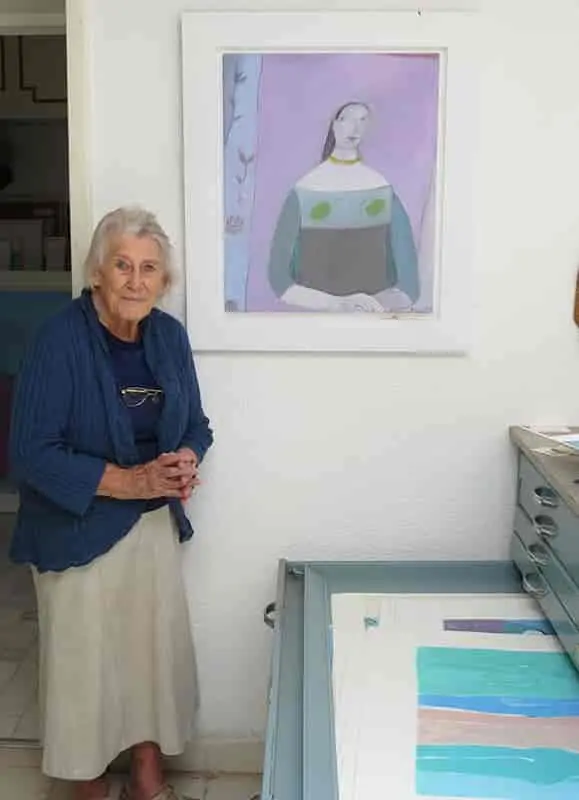
Hélène Joy Laville Ibargüengoitia, 94, an acclaimed painter in her adopted country of Mexico, died at 12:04 p.m, on Friday, April 13, 2018, at her home in Jiutepec. In 1956, while living in Canada, after reading Malcolm Lowry's Under the Volcano, Laville decided to travel to Mexico and make it her home. Soon after, she and Trevor, her young son, arrived in San Miguel Allende without knowing anyone. She attended the Instituto Allende for the next two years, at the end of which she forged the intuitive style of painting that that would bring her growing acknowledgement from critics and collectors. One evening, she came across a box of pastels and paper that a student had left behind. She had never used pastels and could not foresee the synergism that pastels and her quiet temperament combined would deliver. Without thinking or making a concerted effort, Joy Laville came into her own style as a landscape of San Miguel emerged on the paper. An ephemeral moment that had lingered in her memory was transformed into a visual experience. The pastel landscape was followed by other recollections in pastel, of awe and longing, of love and loss, of sadness, of silence, of sensuality and of wonderment. Joy Laville was born in England, in Ryde, on the Isle of Wight, on September 8, 1923. Her father, Captain Francis Anton Laville, belonged to the Seventh Rajput in the Indian Army and was often away. A happy child, she lived an uneventful childhood, interested in drawing, and she was 20 years old when a drawing of legs by Diego Rivera made a deep impression on her. She could not have imagined that one day, she would be known internationally as a Mexican painter and celebrated with the highest honors awarded to a Mexican artist, including, in 2012, the Medalla Bellas Artes, and Premio Nacional de Ciencias y Artes en el área de Bellas Artes. In 1966, Joy Laville found herself fatefully in the middle of a historical controversy that would lift her out of obscurity into the limelight. She was among the group of talented young artists invited to participate in Confrontacion 66, where their work would hang side by side with those by painters from the traditional Mexican School at the Palace of Bellas Artes. The radical contribution of some of the young artists would be known as La Ruptura after chaos ensued following the opening of the show. Fights broke out and paintings on both sides were violently destroyed. Joy Laville, whose work belonged to neither of the rival groups, was unexpectedly awarded the Premio de Acquisición por el Palacio de Bellas Artes, and the decision was celebrated by all. Unwittingly, Joy Laville made history in Mexico's art world by breaking open the way for any artist who wished to exit into freedom. She became a household name. Leonora Carrington and Gunther Gerzso became her friends and admirers. The previous year, on July 15, 1965, Laville had met the love of her life, Mexican author Jorge Ibargüengoitia. They lived together nearly twenty years until Sunday, November 27, 1983, when he was killed in an airplane crash near Barajas Airport. They were living in Paris at the time, and Laville returned to Mexico and settled in Jiutepec, a small town outside of Cuernavaca, where she lived out her life. Following Ibarguengoitia's death, the airplane, a new iconographic element, became a constant in her work, as did the jungle, representing the unknown, "the other side," the place where Jorge had gone. A quiet disquiet became the emotional content that imbued her new work. Joy Laville was interred on Sunday April 15, at 11 a.m, in the country cemetery of Chamilpa, outside Cuernavaca. She is mourned and sorely missed by son Trevor and Lois, his wife, her granddaughter Isabella, and countless friends and collectors who came to say goodbye. "You don't co...