ObituaryMay 4, 2017
Jorge Castillo, a Gentleman of the Visual Arts
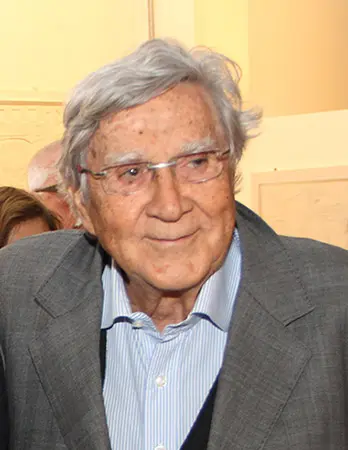
Jorge Castillo, director of the Sur gallery in Uruguay, died in Montevideo on October 11, 2016 at the age of 83. Castillo studied Art History with Professors Julio Payró and Jorge Romero-Brest and, at the same time, Philosophy at the Instituto Artigas de Profesores in the city of Montevideo—he needed a couple of classes more to graduate as a professor. But he was also self-taught and an avid reader of fiction, art, history and other themes that he felt passionate for. One of his many friends, Luis Camnitzer, said about Castillo's death: "It caught me by surprise because I just saw him and he appeared to be in good shape. I met him in 1953, when I began attending the Escuela de Bellas Artes and he was participating in student meetings. After that, we saw each other sporadically and he visited me when I lived in New Jersey during the mid-1960s. We continued to meet in art fairs, show openings, and during my visits to Montevideo. Galería Sur was probably the first commercial gallery in Uruguay of international projection that would occasionally organize museum-level exhibitions. Jorge greatly contributed to the international projection of Uruguayan masters and demonstrated at the local level that, if it wanted, a commercial gallery could fill the gaps left by government policies and exert a serious cultural influence. It is not something that occurs often, and Jorge, through his compelling and yet unassuming presence, established the basis of an exemplary model for all to follow." The years that he spent in jail during the military dictatorship were, as he himself recalled on several occasions, an opportunity to read poetry, essays, history, and philosophy. As a former member of the Uruguayan Communist Party, he was sent to prison when the military government took control of the country. But rather than focusing on suffering he preferred to remember the friends that he met there and funny moments he experienced during those dark years. He was a self-made man in the art market that, for over forty years worked better than anybody else to promote the "Uruguayan" brand in the visual arts. According to a note about Castillo's death written in La Prensa periodical of Buenos Aires: "Through the years, the South stand during arteBA became a must-see place, amid the contemporary tsunami, in which to appreciate works by those classics that inspired the art of today," But Castillo's presence was not limited to the River Plate. He was a well-known figure at the São Paulo Biennial and at the Venice Biennale, but also in the Maastricht and Miami art fairs. During those events, he would present works by Uruguayan artists like Joaquín Torres-García, Pedro Figari, Rafael Barradas, J. Cúeno, and José Gurvich, alongside works by Argentinean artists like Alberto Greco, Roberto Aizenberg, and Alfredo Hliton, to create isles at the level of any museum at the fairs in which he participated. Additionally, Castillo demonstrated a particular commitment to the work by Antonio Berni. From the early age of 23, before founding his famous gallery, he had been one of the most enthusiastic promoters of Uruguayan and Latin American painting in Uruguay and abroad. Castillo shared his prison cell with pianist Miguel Ángel Estrella, who was captured and tortured by the police in Uruguay. According to Camnitzer, "he was accused of being a Cuban agent and he was even mentioned in a book by a former CIA director." Tall and handsome, he was a gentleman but above all he was a charmer. He had the seductive powers of someone who loves art like few people can and he would share his passion with anyone lucky enough to have met him. Always the dreamer, even during his last days alive he did not lose his joie de vivre. It was something that no one taught him and somet...