ObituaryOctober 9, 2017
Jorge Castillo
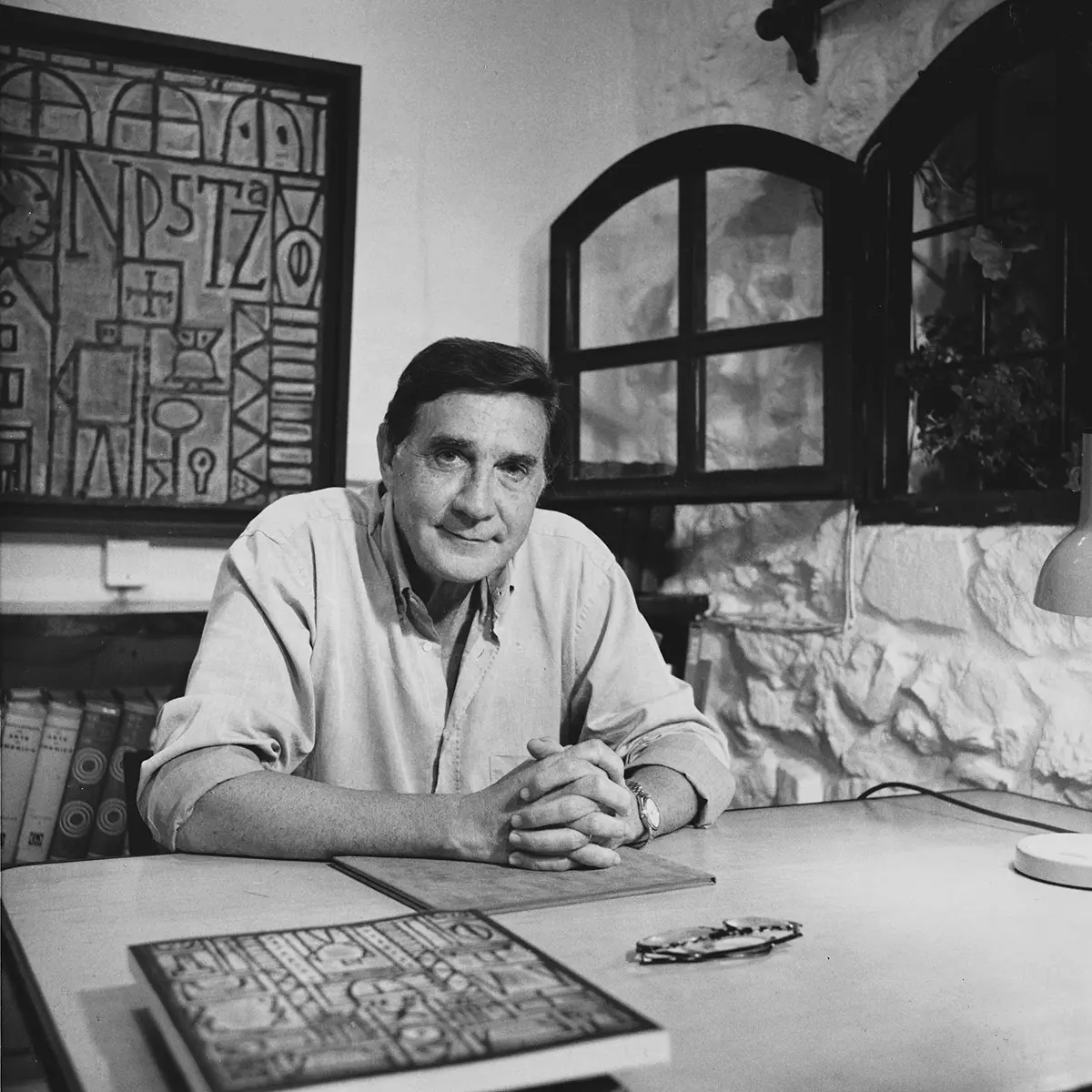
The death of Julio Castillo in Uruguay has not only meant the disappearance of a cultural promoter deeply involved in artistic manifestations, but also the loss of someone who for the last thirty years had been a key referent of Uruguay's international circulation system of modern and contemporary art. Since its inception in December of 1984, Galería Sur bore the mark of Jorge's personal touch. A family initiative, through the years the gallery achieved national and international prominence not only as result of his vast network of interpersonal relationships but also because of the efforts and close collaborations of his wife, Doris Ferretti, and his son Martín, the gallery's current director. When at the beginning of the 1950s Argentinean art critic and historian Jorge Romero-Brest began teaching Art History courses in Montevideo, Jorge and Doris were among his students—along with other Uruguayans who would eventually follow in the steps of their teacher and become prominent art critics. It was in the context of those courses, and by indirectly benefiting from a grant given to Romero-Brest, that Jorge and Doris got to attend the 1953 São Paulo Biennial, an event that had an enormous impact regionally because of the presence of emblematic works from the European vanguards from the first half of the 20th century, in addition to proposals by the emerging abstract-geometric vanguards from the Southern Cone. There, Jorge met Pietro María Bardi—who had founded the Museu de Arte de São Paulo six years earlier—and Lina Bo, with whom he maintained a friendship that lasted nearly three decades. From then on, Jorge Castillo's sincere, friendly and thoughtful demeanor helped him nurture friendships with prominent artists, marchands, collectors, museum directors, and art critics from all over the world, whether as result of his continuous travels, or as consequence of the visits to Latin America of many important personalities of the art world who were particularly interested in attending the São Paulo Biennial. In 1959, during a single stay in Paris, he managed to befriend Cuban poet Nicolás Guillén, Chilean painter Roberto Matta, Spanish poet Rafael Alberti, and Mexican painter José Clemente Orozco, among others. The diversity and prominence of those international contacts became the most important fruits that resulted from his trips, his temperament, and the intellectual social gatherings in Buenos Aires, New York, London, or Paris well into the 1960s. In Spain, Jorge went hunting for works by Rafael Barradas in several cities and towns where the Uruguayan painter had stayed between 1915 and 1928. He was able to find several of Barradas's pieces in the possession of families and private collectors while Barradas was still unknown in the Peninsula. There, he became friends with Spanish art critic Luis González-Robles, who in turn visited him in Montevideo to curate the exhibition titled "Space and Color in Today's Spanish Painting," in 1960. Many years later, in 1993, Jorge Castillo actively participated in a major retrospective of Barradas's work in Catalonia, at the Tecla Sala de Hospitalet space. He demonstrated the same initiative when it came to showcasing the work of Pedro Figari in an exhibition that he took to the 23rd São Paulo Biennial in 1996. Castillo developed a friendship with Joaquín Torres-García's family early on, especially with his wife Manolita Piña and daughter Olimpia. This explains the important role Castillo played in facilitating the first major "launching" of Torres-Garcías's work in Spain in 1967. This was a key year in the early stages of his career as a cultural agent and promoter of artists because during this time he also began to auction artworks ...