ObituaryApril 12, 2011
Jorge Camacho
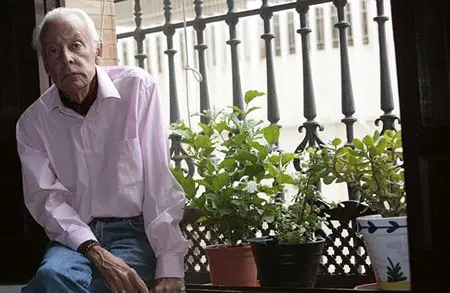
One of the most important Latin American surrealists, Cuban painter Jorge Camacho, died at the age of 77 in Paris. With a vast number of his works included in some of the most important collections around the world, Camacho began to show interest in surrealism during the 1950s while he still lived in Havana, but his work did not achieve an international projection until he moved to Paris. Camacho belonged to the so called Third Generation of Cuban painters and, like many other artists of his time, he was susceptible to the impact of the multiple abstract currents that existed around the world at that time. Through the perfect rendering of line and color, Camacho developed a painting style that was nourished by elements originated in Latin American traditions and cultures, whose rituals and features were revealed through the metaphoric proposals of his beings, and through the utilization of original bone configurations and structures that revealed a strong totemic nature. Jorge Camacho and his wife were very supportive of writer Reinaldo Arenas and were instrumental in promoting his work when this was banned in Cuba; first, by saving it from censorship-before the writer could leave the island through the Mariel, in 1980- and later on, by continuing to promote it after Arenas¿ death, in 1990. His last exhibition was presented at the Museu da Água in Lisbon, in June of 2010.