ObituaryDecember 21, 2016
Joaquín Rodríguez del Paso
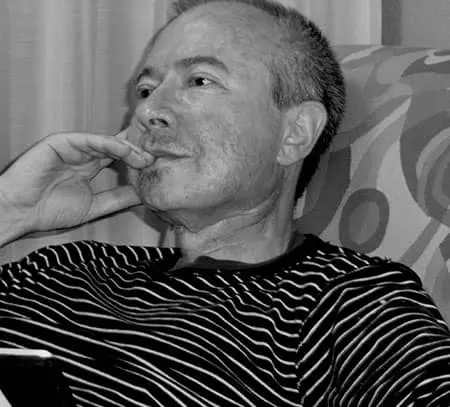
Visual artists, curator, and critic Joaquín Rodríguez del Paso died on October 29 in San Jose, Costa Rica. Born in Puebla, Mexico, and a nephew of renowned writer Fernando del Paso, Joaquín arrived in Central America as a child. It was there that he completed his first art studies, eventually graduating from the Department of Fine Arts of the Universidad de Costa Rica. By then, he already stood out to the point of being granted the Fulbright Scholarship, which allowed him to complete a graduate degree at Pratt Institute in New York City, this time in industrial Design. Back in Costa Rica, he begins his artistic career, working with the Galería Jacobo Karpio and exhibiting his work, throughout his life, in all of the most important events and spaces of the region, including: Galería Nacional and Museo de Arte y Diseño Contemporáneo, in San Jose, as well as in most of the Central American Biennials. As a teacher, Rodríguez del Paso contributed to the development of new generations of Costa Rican artists alongside Virginia Pérez-Ratton, collaborating with the Teoretica project whenever he had an opportunity to do so. At the same time, he was receiving all the honors and recognitions given in Costa Rica—the place that he considered his country, but without ever forgetting his Mexican roots—including: the Ancora Award for Two-Dimensional Art, for his exhibition "Fata Morgana," and the Aquileo Echeverría National Award of the Costa Rican Ministry of Culture in the category of painting (2013). Noteworthy of mention was his participation in "Betweentropics," a group exhibition that was essential for understanding the state of the visual arts in the region, presented at the Museo Sofía Imber, in Caracas; the Fifth and Sixth editions of the Havana Biennial, and with "Container 96," which was taken to ARCO, the Ludwig Forum Aachen and the GATE Foundation in The Netherlands. Rodríguez del Paso also participated in the 23rd São Paulo Biennial in 1988. It is impossible to label a body of work that flows so loosely between those techniques that the artist deemed most appropriate for a particular time: painting, photography, found objects and appropriations, sculpture, and video art. Could it be that the sole recurrent element to describe his work is the cynicism with which he approached his favorite theme—namely, the political and social relationship between the metropolitan centers of cultural production and the periphery, its power structure, semiotic, and hypocrisy? The context in which he practiced this criticism consisted of a Latin American modernity that resisted extinction and a menacing globalization. From this emerged his grand retrospective "Super Modern" at the Museo de Arte y Diseño Contemporáneo that reviewed Rodríguez del Paso's entire artistic trajectory. In what would be his last exhibitions, Joaquín Rodríguez del Paso approached the theme of identity at Despacio, Federico Herrero's nonprofit institution in downtown San Jose; and in a collection of works that were crucial in his trajectory, in an exhibition presented just one month before his death, on the occasion of the 10th Central American Biennial at Klaus Steinmetz Arte Contemporáneo. Joaquín Rodríguez del Paso died as result of a blow to the head in a domestic accident. He had survived cancer twice.