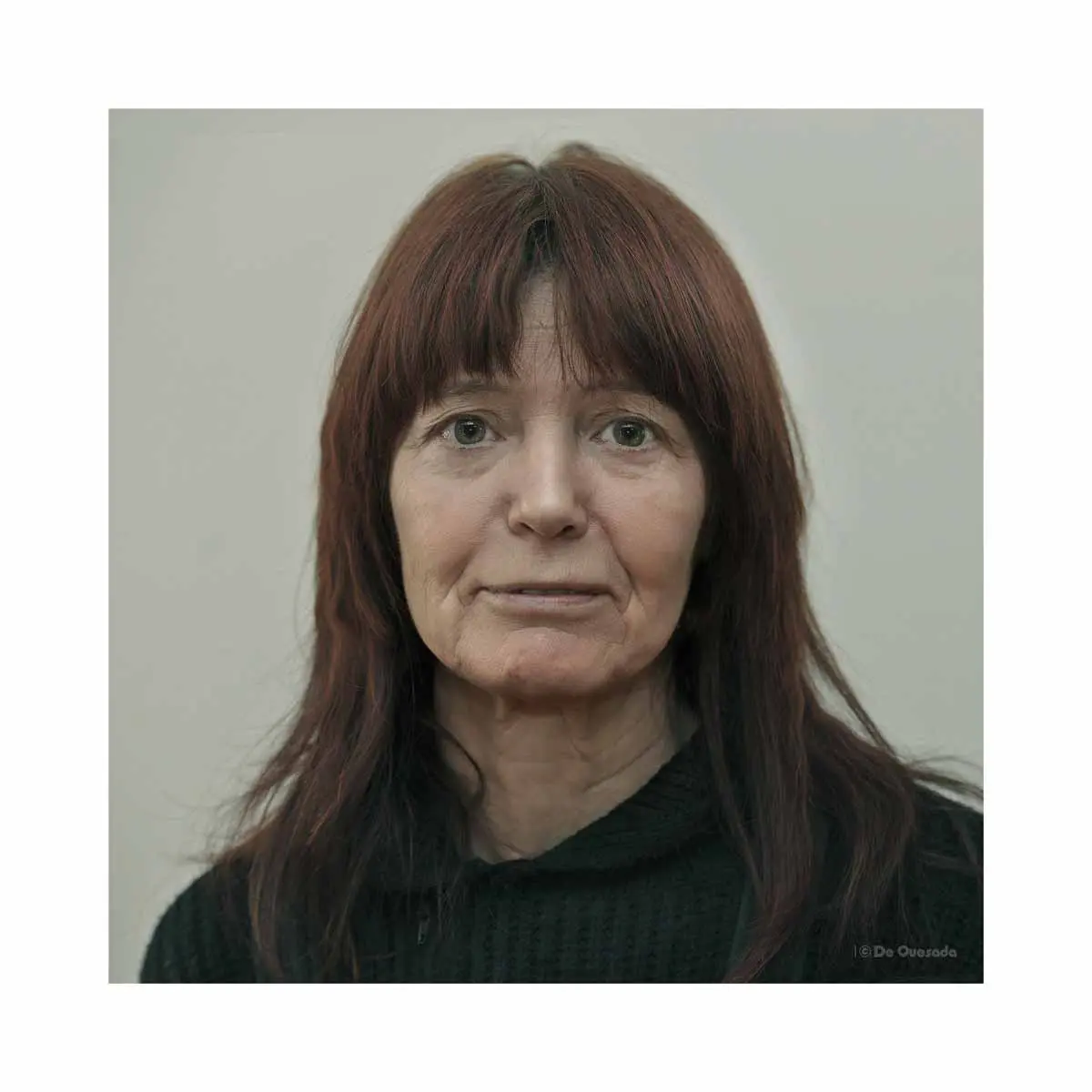
Jean Fisher
Contrary to what might seem at first glance, the United Kingdom is one of the European countries where most attention has been paid to Latin American art. This vast artistic universe is known deeper there than in most parts of the world. There are many publications on Latin American art, exhibitions are continuously organized that center on Latin American artists, artworks from the region are part of many art collections and are the subject of serious study in university environments. This interest is due to many factors, including the way paved by black British artists and the highly influential decolonizing action of intellectuals with roots in the former British Empire. Although not a "black" person, and instead a white Englishwoman born in Suffolk, art critic, editor and teacher (a thinker, as she is today emphatically called by art critic Guy Brett) Jean Fisher was a very important agent for this.
Although Fisher mainly focused on Irish contemporary art, the art of American aborigines (she paid special attention to the work of Jimmie Durham), the art that in the United Kingdom is called "Black Atlantic" art, and, during the end of her life, on Palestine, her interest in and support of—both practical as well as discursive—Latin American art was extraordinary. Her influence was mostly felt during the first decade of the London magazine Third Text (1989-1999), when she was its brilliant and committed editor. This journal represented a milestone for promoting and reflecting on contemporary art from Africa, Latin America, Asia, the Middle East, and the Caribbean—as well as their communities in the diaspora.
Significantly, the first issue of Third Text included an essay by Chilean art critic and theoretician Nelly Richard, and I myself had the opportunity to collaborate regularly with the publication, along with other Latin American colleagues who wrote about the art and culture of the Continent. It is interesting to note that the magazine began to be published in the same year of the Third Biennial of Havana, which strengthened a new era of knowledge, appreciation and international circulation of art in most of the world, which had been until then segregated by very hermetic hegemonic circuits.
Fisher's academic training, thinking, and writing were very unique. She studied zoology, medicine and visual arts. She did not think in the "French" or "postcolonial" way, nor was she a Marxist in the strict sense. I would venture to say that she was a "subaltern" intellectual in an expanded sense of the term, because of her political as well as discursive and aesthetic positioning. Or rather, a trickster, a Pomba Gira, as I believe that she would have liked to be called—or, at the very least, would have laughed pleased to hear others refer to her in that way. Fisher collected her "contaminated" essays from many heterodoxies (she coined the notion of "contamination" to refer to the multidirectional complexity of contemporary cultural processes) in a book whose title speaks of her erudite anti-academic posture: Vampire in the Text. Selected Essays on Contemporary Art (2003). In 2004, I had the privilege of editing along with Fisher the anthology Over Here. International Perspectives on Art and Culture, and collaborating with her in the introductory text. In fact, she wrote most of the text in her non-academic English; she approached it as a writer, in a sharp manner full of character, and had the generosity of sharing it with me.
Generosity and social commitment always guided her life and work. When she lived in New York, Fisher was a critic in the mainstream. She regularly published in Art Forum, but left this position to go where she was most useful to make this world—or at least the world of art—a little bette...