ObituaryAugust 11, 2016
Ivald Granato
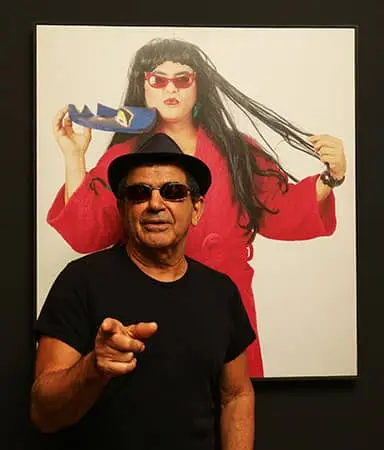
Artist Ivald Granato died in the month of July leaving a rich legacy behind for contemporary art in Brazil. Prolific, restless, and an eternal revolutionary against the artistic system, Granato explored a wide range of techniques and processes: drawing, painting, engraving, objects, multimedia, performance, ceramics, and sculpture, among others. In all these artistic disciplines, he was able to stand out for the originality of his ideas. He burst into the artistic scene at the same time that the pop and conceptual currents did, at a time in which dThe Paulo Reis Residency project is born from the close friendship between Portuguese art critic and curator Paulo Reis, Brazilian artists Sandra Cinto and Albano Alfonso, and Spanish critic and curator David Barro (director of the DARDO periodical). After the death of Reis in 2011, Cinto, Alfonso, and Barro developed a non-profit residency project as a tribute to the unique contributions by Reis as a creator of bridges between Brazil, Portugal and Spain. In Reis's own words: "Taking into account all the activities, personal and artistic encounters, future connections, and the whole bunch of smiles generated as result, I think that it fulfilled my goal of bringing together people that I admire for their work and personal character and whose interaction and shared interests I believed could lead to the birth of interesting projects. I believe in building bridges that connect through affection, whether artistic or human. Only the pillar of affection can support such bridges." The Paulo Reis Residency offers guest artists a studio-workshop where they can develop their work, as well as interactions with other artists and curators. The artists complete the residency with a public exhibition at the Projeto Fidalga space (a non-profit project created by artists Sandra Cinto and Albano Alfonso). Some of the artists that have completed the Paulo Reis Residency include: Patrick Hamilton, Amália Pica, Amelie Bouvier, and Juan José Santos, among others. More information is available at: http://www.ateliefidalga.com.br/categories/paulo-reis-residency ictatorial regimes were still terrorizing the cultural field with censorship and prosecution. During that period he resorted to a repertoire mainly defined by irreverence, whether in paintings, drawings or even performance actions. In 1978, Granato organized the happening Mitos Vacíos (Empty Myths) on Augusta street in São Paulo. It was a very ironic way of challenging the first (and last) Latin American Biennial and its "Myths and Magic" theme. The event was regarded as an anthological moment for Brazilian art. It included artists like Hélio Oiticica, who dressed up in a swimsuit, silver color shoes, pink shirt, wore heavy make-up and a feminine wig. During the 1980s, he followed the rhythm of his generation, creating monumental works on canvas with an abundance of figures and colors. Two examples of that period are: Gogh Visita el Mato Grosso (Gogh Visits Mato Grosso, 1985), and El Hombre Que Vio el Halley (The Man Who Saw the Halley, 1985). His paintings are characterized by quick brushstrokes, figures with blurred outlines associated with signs, graffiti, graphics and stains. He produced several series of works, changing the style of the composition on each of the themes that he approached. Influenced by Cubism, Ivald began to paint from an early age. In 1967, he was admitted to the Escola de Belas Artes of the Universidade Federal do Rio de Janeiro. In 1970, he traveled through Latin America and experimented with colors. He participated in solo and group exhibitions in museums and biennials at the national and international levels. He presented several performances and interventions, resorting to video and photography to document them....