Book ReviewsSeptember 4, 2020· By Francine Birbragher-Rozencwaig PHD
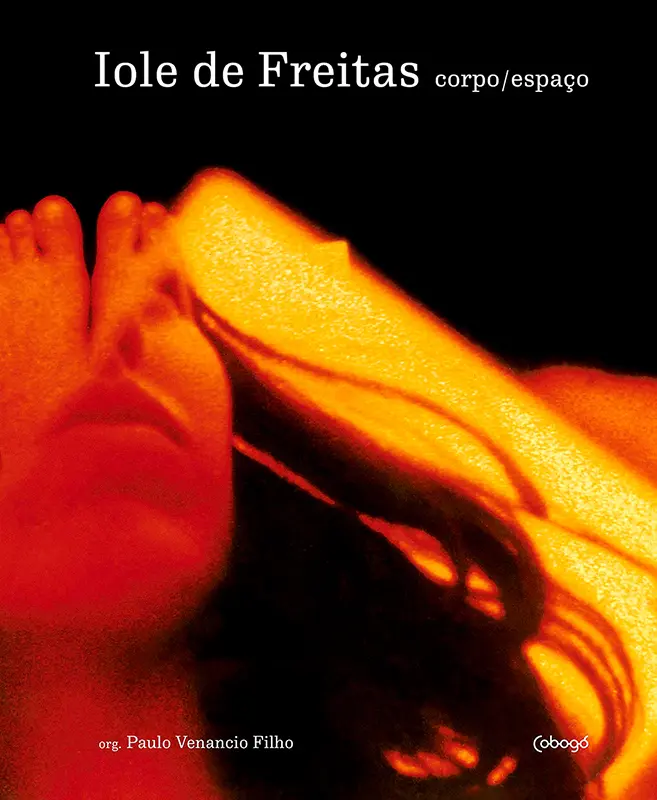
Iole de Freitas corpo / espaço (body/space)
Coordination: Paulo Vinicio Filho
Edited by: Editora de Livros Cobogó, Rio de JaneiroBilingual edition Portuguese/English 2018
Iole de Freitas corpo / espaço (body/space) is an important editorial project that documents the trajectory of this outstanding Brazilian artist. Born in Belo Horizonte (1945), she traveled to Rio de Janeiro at the age of seven. She took the first painting classes at the Museum of Modern Art and developed a taste for dance, a discipline she practiced for twenty years and marked her interest in space and movement, intrinsically linked to her artwork. She also learned jewelry and weaving and studied design at the Escola Superior de Desehho Industrial. In 1970 she traveled to Italy, where she made experimental films and photographic sequences, considered her first expressions in the field of visual arts.
The book begins with an introductory essay, written by the project’s coordinator Paulo Venancio Filho, that presents a detailed summary of the artist's career. In the first instance, it places Iole de Freitas in the context of the European avant-garde, specifically in Milan (Italy), in the seventies. “Milan concentrated a new artistic energy that brought together artists of various generations such as Lucio Fontana, Piero Manzoni, and the newcomers of Arte Povera. At that moment in history, a vast repertory of experiments was being carried out, reclaiming a variety of processes, techniques and materials hitherto marginal to artistic modernity. Heterodox, innovative, and experimental practices arose to characterize contemporary art. [...] each artist responded in his or her own manner, finding their own specific, truly unique work processes. And not only processes, but techniques, materials, forms, etc. – devoid of boundaries, norms or rules, languages and possibilities of artistic investigation multiplied.”1 It is there that Iole de Freitas develops her first investigations in the fields of cinematography and photography, through which she analyzes movement, in particular, body action, as well as the emotions that it entails, such as tension, anxiety, and fear. According to the artist, “...My language came about through a desperate emergency. Expressing myself, building a language and inserting it within an active cultural milieu was urgent.”2
The first part of the monograph titled “An Artist of the European Avant-Garde” (1972-1981), documents this experimental period, in which Iole de Freitas films and photographs herself to discover the forces that characterize inertia and movement. At first, she projected herself anonymously on different surfaces, including walls, mirrors, and fabrics.
The artist created games between different planes that released the body at the spatial level by cutting the fabrics and showing a knife. In this way, the artist created games between different planes that released the body at the spatial level and transmitted emotions such as fear and surprise.
From this investigative process —in which she worked with the corporeal in an intimate and personal way closely linked to her experience in the field of dance— emerged pieces made with rubber tubes, wire, and metal mesh to which she transferred the tensions and contortions initially explored in film. Lucy Lippard’s essay “Iole de Freitas – the Multiplied Image” (1978) accompanies the visual materials included in this chapter, which include stills of the films, photographic sequences, and original annotations by the artist.
The second part of the book, “The Body of Sculpture” (1981-1999), documents the first two decades of her sculptural work. Initially, the elements she used in her films, such as the sharp object and the fabric, materialized in the creation of wire frames loaded with tension and energy. The use of metal mesh gave greater malleability and transparency to works that, little by little, grew in size until they became massive installations made of brass or steel mesh that transcended the space in which they were shown. As Venancio Filho indicates, “The movement of the folds, the undulations, and the volutes impress upon the sculpture a conflicting transit of tensions and distensions, imposing a summation that resolved itself in a final cohesion that is the limit of its physical expansion.”3
The second chapter includes preparatory drawings, photos of the artist making her sculptures, a selection of images. It also include the following historical texts: “I Do Not Know” by Paulo Sergio Duarte (1984), “Concrete Fluids” by Ronaldo Brito (1988), “Traumatic Gentleness” by Paulo Venancio Filho (1990), “Restlessness of the Infinite” by Paulo Venancio Filho (1991), and “Between Place and Passage” by Rodrigo Naves (1994).
The third part of the monograph “The Body is the Architecture” (1999-2018), documents works that interact with outdoor and public spaces. The first construction of this series, Dora Maar in the Pool (1999), is based on the dimensions of the vertices of the bottom of a pool, in which distorted steel rods are projected at the height of twelve meters high. For the first time, Iole de Freitas used sheets of frosted polycarbonate, a material she continues to use due to its malleable and visual qualities.
One of the iconic works of this phase was the installation done in documenta 12, in Kassel (Germany), in 2017, in which the artist established the continuity between the work exhibited in the gallery of the Fridericianum Museum and the massive construction of stainless steel and polycarbonate crystal she installed on the facade of the building. The texts “Documenta 12” by Manuela Ammer (2007) and “Inner Sky” by Sônia Salzstein (2000) document this third period.
By way of conclusion, the book includes Elisa Byington's essay “Curved Fold." In it, the author provides a summary of the evolution of Iole de Freitas’ work, stressing her obsession with movement, highlighting the importance of the participation of the spectator in the perception of the work, and introducing the most recent series made with painted white steel. According to Byington, in this series, “[...] weight remains imprinted upon the heart of the material, also revealing its presence in the dense shadow which the torqued surfaces project upon themselves, intermittently emphasizing architectural intentions as if they aspired to migrate to another scale.”4
NOTES
1. Paulo Venancio Filho, “Iole de Freitas corpo/espaço”, Iole de Freitas corpo/espaço (Río de Janeiro, Cobogó, 2018), p. 10.
2. Iole de Freitas, interviewed in Suzy Muniz, ed. Iole de Freitas: O desenho da fala (2012), p. 69. Cited by Paulo Venancio Filho, “Iole de Freitas corpo/espaço”, Iole de Freitas corpo/espaço (Río de Janeiro, Cobogó, 2018), p. 10.
3. Venancio Filho, p. 22.
4. Elisa Byington. “Dobradura curva”, p. 244.
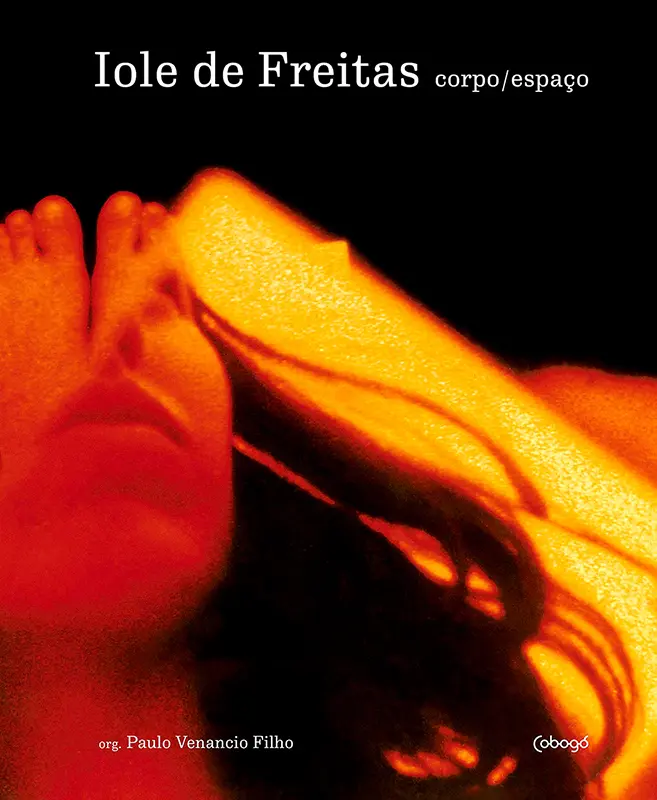
Edited by: Editora de Livros Cobogó, Rio de JaneiroBilingual edition Portuguese/English 2018
Iole de Freitas corpo / espaço (body/space) is an important editorial project that documents the trajectory of this outstanding Brazilian artist. Born in Belo Horizonte (1945), she traveled to Rio de Janeiro at the age of seven. She took the first painting classes at the Museum of Modern Art and developed a taste for dance, a discipline she practiced for twenty years and marked her interest in space and movement, intrinsically linked to her artwork. She also learned jewelry and weaving and studied design at the Escola Superior de Desehho Industrial. In 1970 she traveled to Italy, where she made experimental films and photographic sequences, considered her first expressions in the field of visual arts.
The book begins with an introductory essay, written by the project’s coordinator Paulo Venancio Filho, that presents a detailed summary of the artist's career. In the first instance, it places Iole de Freitas in the context of the European avant-garde, specifically in Milan (Italy), in the seventies. “Milan concentrated a new artistic energy that brought together artists of various generations such as Lucio Fontana, Piero Manzoni, and the newcomers of Arte Povera. At that moment in history, a vast repertory of experiments was being carried out, reclaiming a variety of processes, techniques and materials hitherto marginal to artistic modernity. Heterodox, innovative, and experimental practices arose to characterize contemporary art. [...] each artist responded in his or her own manner, finding their own specific, truly unique work processes. And not only processes, but techniques, materials, forms, etc. – devoid of boundaries, norms or rules, languages and possibilities of artistic investigation multiplied.”1 It is there that Iole de Freitas develops her first investigations in the fields of cinematography and photography, through which she analyzes movement, in particular, body action, as well as the emotions that it entails, such as tension, anxiety, and fear. According to the artist, “...My language came about through a desperate emergency. Expressing myself, building a language and inserting it within an active cultural milieu was urgent.”2
The first part of the monograph titled “An Artist of the European Avant-Garde” (1972-1981), documents this experimental period, in which Iole de Freitas films and photographs herself to discover the forces that characterize inertia and movement. At first, she projected herself anonymously on different surfaces, including walls, mirrors, and fabrics.
The artist created games between different planes that released the body at the spatial level by cutting the fabrics and showing a knife. In this way, the artist created games between different planes that released the body at the spatial level and transmitted emotions such as fear and surprise.
From this investigative process —in which she worked with the corporeal in an intimate and personal way closely linked to her experience in the field of dance— emerged pieces made with rubber tubes, wire, and metal mesh to which she transferred the tensions and contortions initially explored in film. Lucy Lippard’s essay “Iole de Freitas – the Multiplied Image” (1978) accompanies the visual materials included in this chapter, which include stills of the films, photographic sequences, and original annotations by the artist.
The second part of the book, “The Body of Sculpture” (1981-1999), documents the first two decades of her sculptural work. Initially, the elements she used in her films, such as the sharp object and the fabric, materialized in the creation of wire frames loaded with tension and energy. The use of metal mesh gave greater malleability and transparency to works that, little by little, grew in size until they became massive installations made of brass or steel mesh that transcended the space in which they were shown. As Venancio Filho indicates, “The movement of the folds, the undulations, and the volutes impress upon the sculpture a conflicting transit of tensions and distensions, imposing a summation that resolved itself in a final cohesion that is the limit of its physical expansion.”3
The second chapter includes preparatory drawings, photos of the artist making her sculptures, a selection of images. It also include the following historical texts: “I Do Not Know” by Paulo Sergio Duarte (1984), “Concrete Fluids” by Ronaldo Brito (1988), “Traumatic Gentleness” by Paulo Venancio Filho (1990), “Restlessness of the Infinite” by Paulo Venancio Filho (1991), and “Between Place and Passage” by Rodrigo Naves (1994).
The third part of the monograph “The Body is the Architecture” (1999-2018), documents works that interact with outdoor and public spaces. The first construction of this series, Dora Maar in the Pool (1999), is based on the dimensions of the vertices of the bottom of a pool, in which distorted steel rods are projected at the height of twelve meters high. For the first time, Iole de Freitas used sheets of frosted polycarbonate, a material she continues to use due to its malleable and visual qualities.
One of the iconic works of this phase was the installation done in documenta 12, in Kassel (Germany), in 2017, in which the artist established the continuity between the work exhibited in the gallery of the Fridericianum Museum and the massive construction of stainless steel and polycarbonate crystal she installed on the facade of the building. The texts “Documenta 12” by Manuela Ammer (2007) and “Inner Sky” by Sônia Salzstein (2000) document this third period.
By way of conclusion, the book includes Elisa Byington's essay “Curved Fold." In it, the author provides a summary of the evolution of Iole de Freitas’ work, stressing her obsession with movement, highlighting the importance of the participation of the spectator in the perception of the work, and introducing the most recent series made with painted white steel. According to Byington, in this series, “[...] weight remains imprinted upon the heart of the material, also revealing its presence in the dense shadow which the torqued surfaces project upon themselves, intermittently emphasizing architectural intentions as if they aspired to migrate to another scale.”4
NOTES
1. Paulo Venancio Filho, “Iole de Freitas corpo/espaço”, Iole de Freitas corpo/espaço (Río de Janeiro, Cobogó, 2018), p. 10.
2. Iole de Freitas, interviewed in Suzy Muniz, ed. Iole de Freitas: O desenho da fala (2012), p. 69. Cited by Paulo Venancio Filho, “Iole de Freitas corpo/espaço”, Iole de Freitas corpo/espaço (Río de Janeiro, Cobogó, 2018), p. 10.
3. Venancio Filho, p. 22.
4. Elisa Byington. “Dobradura curva”, p. 244.
Gallery