ExhibitionJune 18, 2015
Impressionism and the Caribbean: Francisco Oller and His Transatlantic World
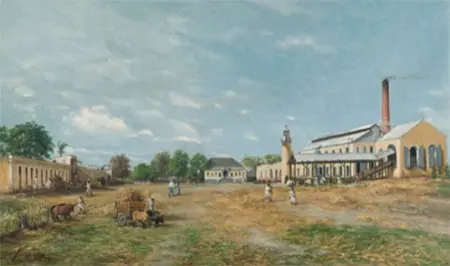
The Blanton Museum of Art at The University of Texas at Austin presents Impressionism and the Caribbean: Francisco Oller and His Transatlantic World, an exhibition of approximately eighty paintings by Realist-Impressionist painter Francisco Oller (1833– 1917) and his contemporaries. Organized by the Brooklyn Museum and debuting at the Blanton, the exhibition reveals Oller's important contributions to both the Paris avant-garde and the Puerto Rican school of painting. Providing historical, geographic, and cultural context for Oller's work, the exhibition also features paintings by nineteenth-century masters Paul Cézanne, Winslow Homer, Claude Monet, Camille Pissarro, and others. The Blanton's presentation also includes a small selection of works by contemporaneous Texas artists working on both sides of the Atlantic. Oller emerged from the relatively small art world of San Juan in the 1840s. After training in the San Juan studio of Puerto Rican painter Juan Cleto Noa, he traveled to Spain where he drew inspiration from works in the Museo del Prado and studied under Neoclassicist Federico de Madrazo. However, it was Paris that truly captured Oller's imagination. He made three trips there (1851–53; 1858–65; 1895–96), studying in the ateliers of Thomas Couture and Charles Gleyre, and was mentored by Realist master Gustave Courbet, whose influence can be seen throughout Oller's career. In Paris, Oller affiliated himself with Paul Cézanne, fellow Caribbean artist Camille Pissarro (born in St. Thomas), and other members of the Impressionist and Post-Impressionist movements. Although he spent many formative years away from home, Puerto Rico remained Oller's primary subject and source of inspiration. Lush, tropical landscapes layered with historical meaning, portraits of Puerto Rican intellectual figures, still life paintings of local fruits, and unidealized depictions of urban and rural labor are counted among the artist's most loved and recognized works. Beyond his work as an artist, Oller also played a key role in educational reform on his native island, publishing influential treatises on art and ethics and founding ten schools and art academies, several of which were tuition-free and open to women. Highlights of the exhibition include Oller's Hacienda La Fortuna (1885), The School of Master Rafael Cordero (1890–92), and an intimate plainer portrait of Cézanne. Impressionism and the Caribbean builds on the Blanton's legacy of presenting groundbreaking scholarship on Latin American art and artists. After its premiere at the Blanton, the exhibition will travel to the Brooklyn Museum in New York and the Museo de Arte de Puerto Rico in San Juan. From San Juan to Paris and Back: Francisco Oller and Caribbean Art in the Era of Impressionism, a book by Edward J. Sullivan, will accompany the exhibition. In conjunction with the exhibition, the Blanton will host a variety of public programs. For more information visit: http://www.blantonmuseum.org/