Art NotesDecember 16, 2014
Mestizo Histories
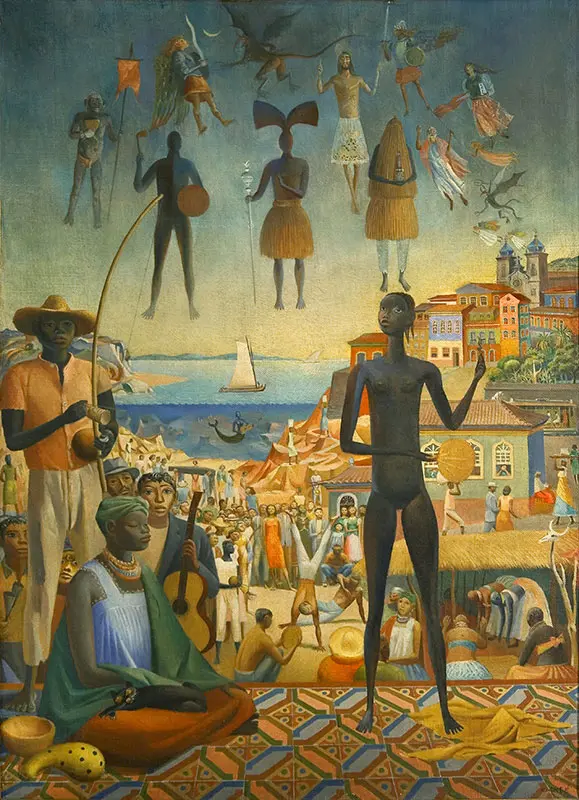
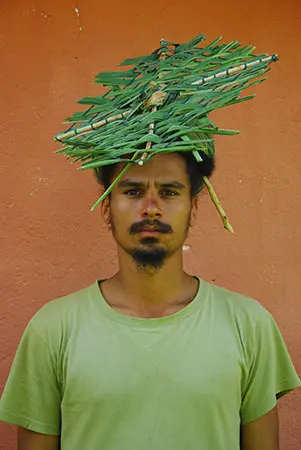
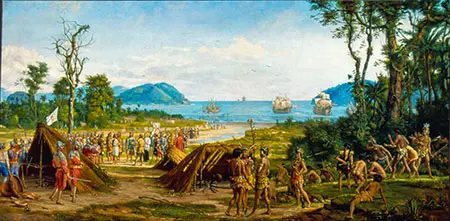
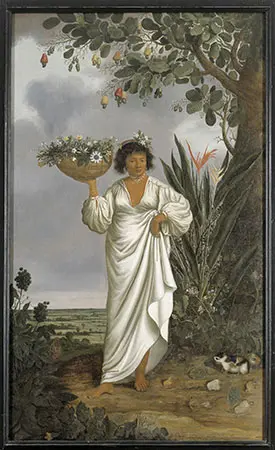
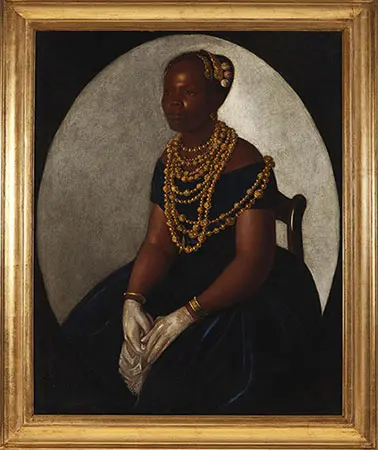
The exhibition entitled Mestizo Stories, curated by Adriano Pedrosa and Lilia Schwarcz, was presented at the Instituto Tomie Ohtake in São Paulo from August 29 to October 5. An anthropologist and professor at the University of São Paulo, Schwarcz has done extensive research on the relationship between culture, image and racial issues in Brazil and authored some of the essential books for this theme, such as O Espetáculo das Raças (The spectacle of races, 1993). While Pedrosa's recent trajectory includes curatorships in places outside Brazil like at the Istanbul Biennial (2011), we must not forget his co-curatorship in the famous Bienal de la Antropofagia (Biennial of Cannibalism) in São Paulo, a curatorial project by Paulo Herkenhoff. As the title suggests, the exhibition revolves around the idea of miscegenation in Brazil, presented through histories—given their alleged factual nature they cannot be just called stories—and other not entirely factual narratives that are closer to fiction and invention but that also revolve around the racial debate in Brazil. The exhibition could somehow be reminiscent of the classic text written by German scientist Karl Friederich von Martius entitled How to Write the History of Brazil (1845). This text is generally remembered because it bases part of its argument on the notion of three great races that, according to von Martius, represented the foundational essence for the young Brazilian nation; namely, "the copper or American color, white or Caucasian, and black or Ethiopian." "From that encounter, from the blending of mutual relationships and changes in those three races, emerged the current population in Brazil, whose history as result has left a unique mark." The curatorial project appears to focus precisely around the archeology of this "very special mark" in Brazil. In what way has this extensive group of colonialist narratives, which Brazilian culture perceived as the result of a not very pure mix between ethnic groups, appeared, and insists on appearing, through images of different temporalities and geographies? Rather than to reiterate the statement by Karl Friederich von Martius, Pedrosa and Schwarcz seem to be more concerned—as result of their commendable research—with trying to deconstruct that simplistic and predominant interpretation of the origin of the "Brazilian people." To do so, there is nothing more fitting than to think of exhibition rooms based on constant topics centered on the production of images in Brazil, such as "Rites and Religions", "Narratives and Graphics" and "Masks and Portraits". In an expography that widely dialogues with the recent proposals of Paulo Herkenhoff at the Museu de Arte do Rio, viewers were invited to enter spaces permeated by rubbed images—as stated in the advertisement for the exhibition—which incited to a dialogue because of their historical distance and the contrast between materials and content. On the other hand, such configuration of the space—which could be seen as Warburguian—carries other implications: To what extent can the public retain all the historical specificities of the juxtaposed images presented in the galleries? To offer one example, among many: the indigenous and modernist brand of works by Vicente do Rêgo Monteriro are close to indigenous objects, that is to say that, while on the one hand the theme is clearly presented, on the other, the documental minutiae of the images sometimes fade into an amalgam of information that at times some of the dialogues are expressed more through form than based on the uses and semantic fields contained in the images. No matter how removed from this reading is the formalist ghost of the famous "Primitivism in 20th Century Art: Affinity of the Tribal and t...
Gallery