ExhibitionApril 22, 2010
Henri Rousseau
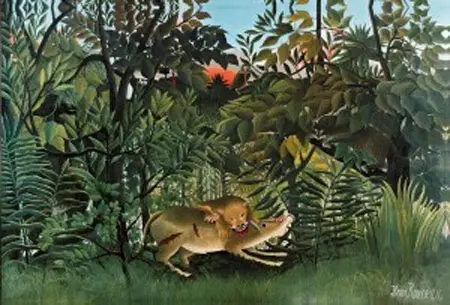
The Museo Guggenheim Bilbao, in collaboration with the Fondation Beyeler, will present in May an exhibition of works by Henri Rousseau, an artist who revolutionized the painting of his time by creating new forms to build a visual world that greatly influenced young artists of the early Twentieth Century. For this reason, the Museo Guggenheim Bilbao pays homage to Rousseau with an exhibition that points ¿ one hundred years after his death ¿ to the relevant role of this French artist as one of the main precursors of modern art. This exhibition includes about forty works arranged both chronologically and thematically, and presents meaningful juxtapositions of paintings with the intention of underscoring key aesthetic elements of the work by the French painter: the combination of aspects from the natural world and from civilization merged into one image that are found both in exotic scenes as well as within the local French contexts; or the quasi-symmetrical and hierarchical arrangement of persons, animals, plants, and other elements in scenes that, thematically, are very different from each other. Such wide-ranging thematic variations were approached by the artist in an innovative manner that was ahead of his time. Rousseau¿s unique style consisted of creating compositions through a method of "cutting and pasting" preexisting independent elements. This compositional process ¿ that could be thought of as a painted collage ¿ became a source of inspiration for vanguard artists such as Picasso, Léger, and Max Ernst. The exhibition showcases the pictorial juxtapositions that clearly reveal the surrealist qualities of Rousseau¿s work and that aid the spectators to perceive the conceptual unity of images that may appear very different from each other, but solely from a thematic standpoint.