ExhibitionFebruary 20, 2015
Printmaking and Modernity
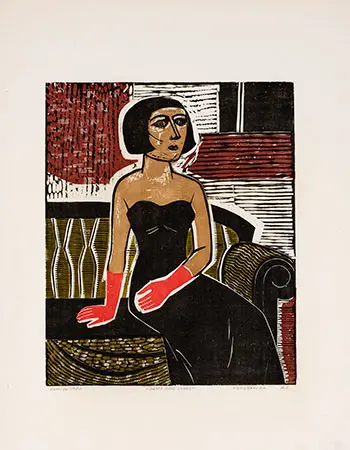
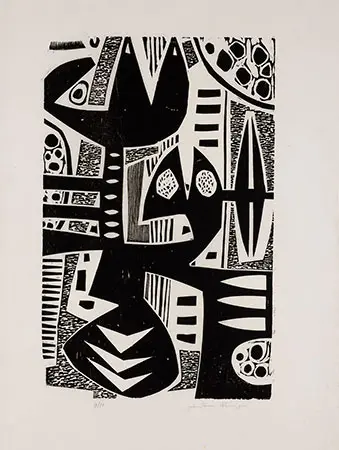
A vast number of first-rate Brazilian artists have embraced and continue to embrace printmaking, even when not to the exclusion of other genres, at least as their primary practice. Gravura e Modernidade, an exhibition at Estaçao Pinacoteca that opened on November 15th and will remain in view through October, 2016, features 201 works by 54 of these artists. With the educational purpose of presenting a panoramic view of the history of this discipline, the show covers the period between 1920 and 1960, which saw the emergence and consolidation of Modernism in the country. The exhibition is the result of extensive research in the Pinacoteca collection, which currently includes around three thousand works in the genre. The institution's team has paid great attention to the study and exhibition of prints and engravings, with a large, dedicated space in the third floor of Estaçao Pinacoteca, the Guita and José Mindin Printmaking Cabinet. Curated by Carlos Martins, the show features such iconic artists as Oswaldo Goeldi, Fayga Ostrower, Lasar Segall, Samson Flexor, Lívio Abramo, Marcelo Grassmann, Aldemir Martins, Regina Silveira, Carlos Scliar, Odetto Guersoni, and Athur Luiz Piza, among others. Early on, in a Brazil that lacked the proper material resources, printmaking demanded from its pioneers great creativity in the production of their work, and it is common to find references to the use of washing-machine cylinders to build improvised presses or the exertion of xylography gauges almost beyond their useful life, as well as the adaptation of tools from one technique to another. Despite such limitations, the expressive force of engravings and prints was well suited to the social contrasts that many of these artists sought to depict; given their reproducibility, they also signified a larger market, albeit with lower values when compared to unique artworks. During the period covered by this exhibition, artists were even known to use, on occasion, engravings and prints as a means of exchange in their everyday transactions. An important aspect of the exhibition is the integration of printmaking and literature, for instance in Goeldi's illustrations for Jorge Amado's Mar Morto. These works were never published with the novel, though, and they only came out in 1967, six year after the artist's death. Also featured are Livio Abramo's images for Alfonso Arinos de Mello Franco's story collection Pelo Sertão, published in 1949. Another point emphasized by Gravura e Modernidade is the importance of printmaking in the popular genre of cordel literature, and its influence on Modernist artists, especially Pernambuco's Gilvan Samico, who carried into the world of high culture this artistic mode employed for the telling of everyday stories, myths, and legends in the Brazilian Northeast. To represent this practice, the curators devoted a space to the cordelista José Costa Leite, with 14 images narrating the stations of the Passion of Christ. From figurative representations to experiments with matrices and supports, techniques and languages, the selection of works offers a broad and diverse overview of the Modernist pathways of printmaking in Brazil.
Gallery