ExhibitionApril 11, 2016
"Desiring Flows"
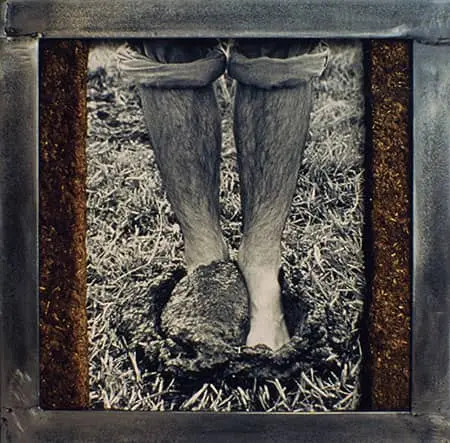
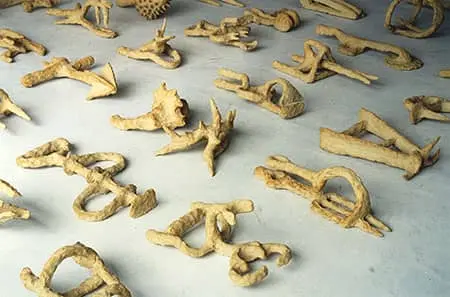
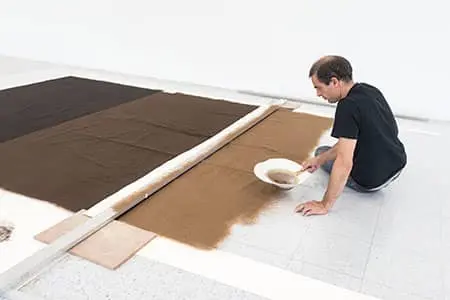
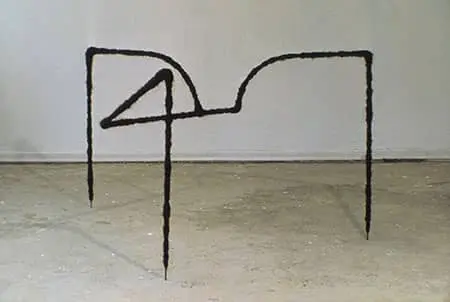
The Museo de Arte of the Universidad Nacional de Colombia presents until June of 2016 the exhibition titled "Desiring Flows" by Colombian artist Juan Fernando Herrán. Curated by María Belén Sáez de Ibarra, the exhibition surveys the work that Juan Fernando Herrán created between 1987 and 1993. It reflects the earliest period of his work and is characterized by experimentation and intuition in the transformation of materials as dissimilar as human hair, lead, vegetal materials, photography, manure, clay, and video. "Desiring Flows" includes 12 works in various formats shown together for the first time, from sculptures and installations, created after Herrán completed his studies at the Universidad de los Andes in Bogota and began a graduate program in London. Some of the pieces belong to his personal collection, while others are part of public and private collections, like the pieces Sin Título (Corona de Espinas) [Untitled (Crown of Thorns), 1990] and Flotsam and Jetsam (1993), which belong to the Colección de Arte of the Banco de la República. Four of the works were created especially for the exhibition. They were conceived as large pieces to better suit the generous space requirements of the Museo de Arte of the Universidad Nacional and its lighting and architectural environment. An example of this is the work Sin Título (Bolas de Pelo Humano) [Untitled (Human Hairballs), 1990), which originally measured 1 x 1 meter but was reconfigured for the exhibition to measure 20 square meters; or the installation Sin Título (Varas de Pelo) [Untitled (Hair Sticks), 1992] that was recreated for the show to reach 5 meters high, taking over the museum's central pool and, with its 7 x 10 meters, becoming a sort of human forest that visitors can wander into. Defined by its sculptural language, the exhibition centers on the human figure and its relationship with death and the environment. Several of these pieces are framed by a historic period that was very difficult for the Colombian people, back when death was brought close to home through detonating bombs and several other violent acts. Thus, these works became acts of defiance prompted by an interest to materialize sensations and issues of the time, but always giving materials the protagonist role. Thus, each of these works is the result of a process of experimentation with a diversity of materials that generated psychic connections around that central theme. In the instance of the work Sin Título (70 Objetos) [Unitled (70 Objects)], consisting of pieces rendered with unbacked clay that resemble bones and that allude to weapons, tools or objects from The Inquisition that could be used for violence against the body—some of these pieces were even created with the eyes closed.
Gallery