InterviewJuly 14, 2020
Interview Margulies
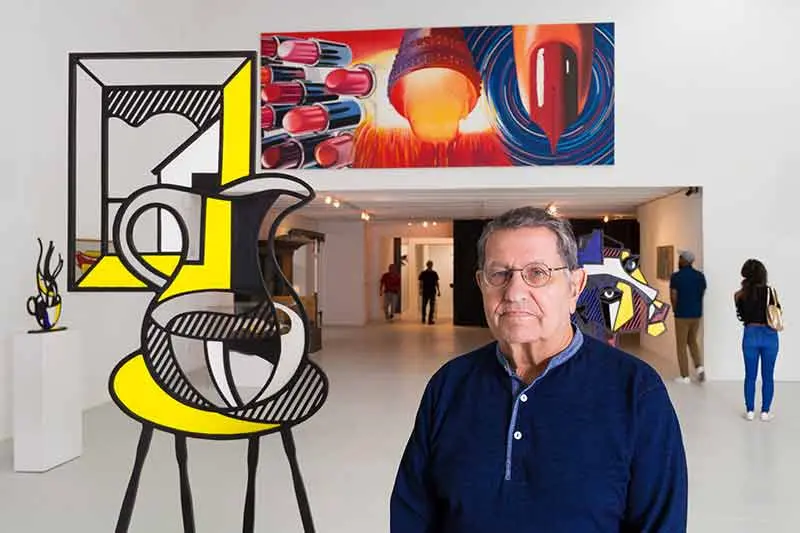
On the occasion of the announcement by Martin Z. Margulies Foundation, on June 25th, of a generous gift of contemporary art to the artists, Celia Birbragher, Editor and Publisher of ArtNexus Magazine interviewed Mr. Martin Z. Margulies, art collector, founder and president of the foundation. https://www.margulieswarehouse.com/
INTERVIEW:
Celia Birbragher (CB): How are you Mr. Margulies? It is such a pleasure to hear you!
Martin Margulies (MM): Thank you very much!
CB: I would like to ask you, when did you start collecting art?
MM: Approximately 40 years ago.
CB: What motivated you to build such an important collection?
MM: Well in the process of my daily life, a friend of mine said “all you're interested in is sports and chasing women” and I said to her, “Is there anything else?” and she said “you aren’t looking into art” and I started going around to a couple of galleries locally and then to New York and one thing led to another and it just sort of happened.
CB: I remember a story that in the nineties you were advised to sell your collection. It was a difficult time, and you answered that it would be the last thing you would sell. Nevertheless, in the recent years you have sold works from your collection.
MM: Well I never thought of selling my collection, but there might be a couple of pieces, one or two pieces that I have sold because of circumstances beyond my control.
CB: Right now, you have decided to sell a large amount of your work to help artists?
MM: Well, first of all, it is incorrect to say that I'm selling the work because I'm not, what I am doing is, there are 400 artworks that I'm giving away freely, and I'm giving it to organizations that help artists and these organizations will sell these works, and I get nothing out of this. We put it on a truck and the truck goes and delivers it to the organizations primarily in New York. But that work must help artists, artists that do not have an affiliation or a gallery and are struggling.
CB: How could the artists know, or which institutions are going to be providing the funds? How can the artists find out?
MM: First of all, I don't even know the organizations. I hired an art advisor who knows the New York art organizations that are nonprofit and all they do is gives help artists with money, they have a vehicle and have hundreds of people in their memberships. A lot of these organizations have people that always support them, and all that money goes to the artists. I can't even tell you many of the organizations, because I don't know.
CB: How about the artists in Miami? Will they be able to get some of these funds?
MM: We are talking to a couple of organizations in Miami that have the capacity to sell the work and give the money to artists.
CB: Excellent! Once we were in London, and we were talking, you commented to me, “Only the art world understands the art world.” Can you expand that comment now?
MM: A lot of my friends when I was in business, building they used to say, what are you doing? Why are you buying art? Why don't you put your money into more real estate? I said, because I enjoy it, and it takes people that are involved and informed, and those are the people that understand the art world. Whether it's the art world or the art market. For instance, just the other night, a painting was auctioned off for $84 million dollars. Now you tell a man on the street who was waiting in line for food, he can't possibly understand that.
CB: Yes, totally agree!
MM: Especially, now, with this virus, there were so many people in need. It’s so sad!
CB: It's true, and the poorest are the ones that will suffer the most. My brother visited your collection once and he said that you have a work from Sam Francis, and you had a story about it. Can you tell us?
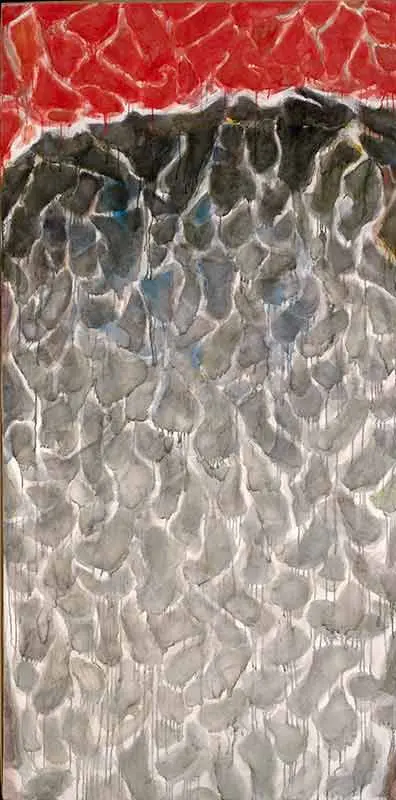
MM: The only story I can tell, I never met Sam Francis. But the piece that I have it's a very early piece from 1953. Sam Francis was in the hospital and he was lying on the bed and he looks at the ceiling. In those days, I guess, they had venetian blinds on the windows and the sun will go thru the little voiles in the venetian blinds and reflect in very organic forms on the ceiling, so he got his inspiration on those early works, he paints a representation of those ceilings that he saw in the hospital.
CB: Do you know how many arts works are in your collection?
MM: Not exactly, but maybe 4000.
CB: I know that at some point you lent some sculptures to FIU (Florida International University -FIU Are they still on loan, in the campus?
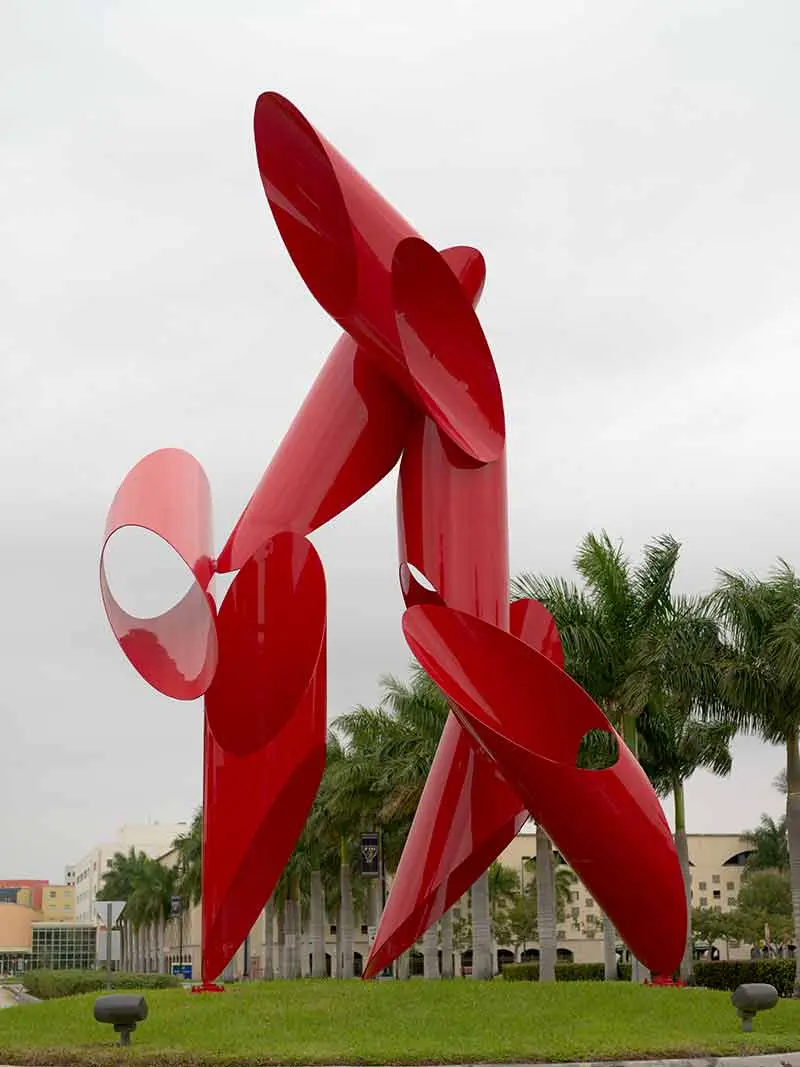
MM: No, I removed them, but they kept several. The entrance way has a great (Alexander) Liberman sculpture that I gave them along with a couple of other pieces. I spread out some of the other works to different organizations, my son went to Cornell I gave them one; I gave one to the University of Florida, a gave Seattle a work, and I kept some of the works for my Warehouse.
CB: The ones you gave to the university, are donations or loans?
MM: They are donations.
CB: If you were in a boat with all your collection and the boat was sinking and you could only save one artwork, which one would you save?
MM: (Laughing) I'd have to call my children first.
CB: That’s a good answer! Now if somebody is interested in buying some of the artworks that you're giving to the institutions, how can they find out? How to reach them?
MM: When we are finished giving the works to the organizations, we will publish a list of each place so that interested buyers can contact the organizations directly.
We know of three organizations in New York that had said they want some of the works, and they've chosen it.
CB: Will that list be available eventually, for us to publish for people to buy the works, whether they want to help, or they want to own them.
MM: Well you just gave me a good idea because these organizations will sell the work and they would probably want as many people buying it, so they can in turn give the money to their artists that are registered with them. But I don't know the organizations myself at this early stage.
CB: Well, keep us in mind when you are ready, and you have the list.
MM: I assume it will be over 20 organizations.
CB: I want to congratulate for this initiative.
MM: Thank you!
CB: It is no doubt that is going to be a big help.
MM: I hope so!
CB: I have heard many collectors who would like to help probably buying works. It will benefit, it's a two-way street: it will help the artists and it might help the collectors to get some very good works. I want to congratulate once more with this initiative
I'm very happy to be able to do this interview, and I'm looking forward, hopefully, when this pandemic is over that we can meet again.
MM: Okay, well thank you very much! We will keep everybody informed once we have this list of organizations. Right now, we have three organizations that have chosen works and the woman that's working up there, she is meeting a lot of other people and we want to make sure that they will give the money to artists, not keep it in their offices, or so forth and that's what we're doing.
CB: Well thank you so much again. Certainly, there is a lot of artists in great needs at these difficult times and I said again It is a wonderful idea and a very generous offer.
MM: Thank you very much! Nice talking!
INTERVIEW:
Celia Birbragher (CB): How are you Mr. Margulies? It is such a pleasure to hear you!
Martin Margulies (MM): Thank you very much!
CB: I would like to ask you, when did you start collecting art?
MM: Approximately 40 years ago.
CB: What motivated you to build such an important collection?
MM: Well in the process of my daily life, a friend of mine said “all you're interested in is sports and chasing women” and I said to her, “Is there anything else?” and she said “you aren’t looking into art” and I started going around to a couple of galleries locally and then to New York and one thing led to another and it just sort of happened.
CB: I remember a story that in the nineties you were advised to sell your collection. It was a difficult time, and you answered that it would be the last thing you would sell. Nevertheless, in the recent years you have sold works from your collection.
MM: Well I never thought of selling my collection, but there might be a couple of pieces, one or two pieces that I have sold because of circumstances beyond my control.
CB: Right now, you have decided to sell a large amount of your work to help artists?
MM: Well, first of all, it is incorrect to say that I'm selling the work because I'm not, what I am doing is, there are 400 artworks that I'm giving away freely, and I'm giving it to organizations that help artists and these organizations will sell these works, and I get nothing out of this. We put it on a truck and the truck goes and delivers it to the organizations primarily in New York. But that work must help artists, artists that do not have an affiliation or a gallery and are struggling.
CB: How could the artists know, or which institutions are going to be providing the funds? How can the artists find out?
MM: First of all, I don't even know the organizations. I hired an art advisor who knows the New York art organizations that are nonprofit and all they do is gives help artists with money, they have a vehicle and have hundreds of people in their memberships. A lot of these organizations have people that always support them, and all that money goes to the artists. I can't even tell you many of the organizations, because I don't know.
CB: How about the artists in Miami? Will they be able to get some of these funds?
MM: We are talking to a couple of organizations in Miami that have the capacity to sell the work and give the money to artists.
CB: Excellent! Once we were in London, and we were talking, you commented to me, “Only the art world understands the art world.” Can you expand that comment now?
MM: A lot of my friends when I was in business, building they used to say, what are you doing? Why are you buying art? Why don't you put your money into more real estate? I said, because I enjoy it, and it takes people that are involved and informed, and those are the people that understand the art world. Whether it's the art world or the art market. For instance, just the other night, a painting was auctioned off for $84 million dollars. Now you tell a man on the street who was waiting in line for food, he can't possibly understand that.
CB: Yes, totally agree!
MM: Especially, now, with this virus, there were so many people in need. It’s so sad!
CB: It's true, and the poorest are the ones that will suffer the most. My brother visited your collection once and he said that you have a work from Sam Francis, and you had a story about it. Can you tell us?
MM: The only story I can tell, I never met Sam Francis. But the piece that I have it's a very early piece from 1953. Sam Francis was in the hospital and he was lying on the bed and he looks at the ceiling. In those days, I guess, they had venetian blinds on the windows and the sun will go thru the little voiles in the venetian blinds and reflect in very organic forms on the ceiling, so he got his inspiration on those early works, he paints a representation of those ceilings that he saw in the hospital.
CB: Do you know how many arts works are in your collection?
MM: Not exactly, but maybe 4000.
CB: I know that at some point you lent some sculptures to FIU (Florida International University -FIU Are they still on loan, in the campus?
MM: No, I removed them, but they kept several. The entrance way has a great (Alexander) Liberman sculpture that I gave them along with a couple of other pieces. I spread out some of the other works to different organizations, my son went to Cornell I gave them one; I gave one to the University of Florida, a gave Seattle a work, and I kept some of the works for my Warehouse.
CB: The ones you gave to the university, are donations or loans?
MM: They are donations.
CB: If you were in a boat with all your collection and the boat was sinking and you could only save one artwork, which one would you save?
MM: (Laughing) I'd have to call my children first.
CB: That’s a good answer! Now if somebody is interested in buying some of the artworks that you're giving to the institutions, how can they find out? How to reach them?
MM: When we are finished giving the works to the organizations, we will publish a list of each place so that interested buyers can contact the organizations directly.
We know of three organizations in New York that had said they want some of the works, and they've chosen it.
CB: Will that list be available eventually, for us to publish for people to buy the works, whether they want to help, or they want to own them.
MM: Well you just gave me a good idea because these organizations will sell the work and they would probably want as many people buying it, so they can in turn give the money to their artists that are registered with them. But I don't know the organizations myself at this early stage.
CB: Well, keep us in mind when you are ready, and you have the list.
MM: I assume it will be over 20 organizations.
CB: I want to congratulate for this initiative.
MM: Thank you!
CB: It is no doubt that is going to be a big help.
MM: I hope so!
CB: I have heard many collectors who would like to help probably buying works. It will benefit, it's a two-way street: it will help the artists and it might help the collectors to get some very good works. I want to congratulate once more with this initiative
I'm very happy to be able to do this interview, and I'm looking forward, hopefully, when this pandemic is over that we can meet again.
MM: Okay, well thank you very much! We will keep everybody informed once we have this list of organizations. Right now, we have three organizations that have chosen works and the woman that's working up there, she is meeting a lot of other people and we want to make sure that they will give the money to artists, not keep it in their offices, or so forth and that's what we're doing.
CB: Well thank you so much again. Certainly, there is a lot of artists in great needs at these difficult times and I said again It is a wonderful idea and a very generous offer.
MM: Thank you very much! Nice talking!
Gallery