Art NotesApril 28, 2017
Exhibition About the Modern Art Market at the Museu de Arte Moderna in São Paulo (MAM)
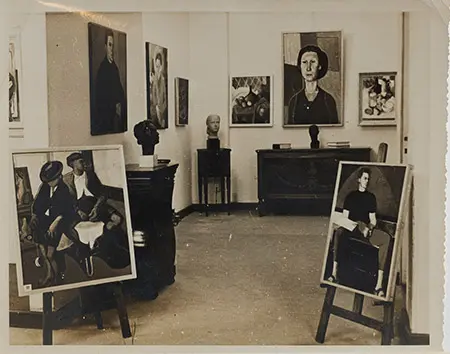
From February 7 to April 30, 2017, the Museu of Arte Moderna in São Paulo (MAM) presented the exhibition titled "The Modern Art Market in São Paulo: 1947–51," under the curatorship of José Armando da Silva. The exhibition celebrated the 70th anniversary of the establishment of the first art gallery of modern art in that Brazilian city—Galeria Domus—and told the story of the first exhibitions presented there. Important research was the basis for the organization of the show and for the book titled Artistas na Matrópole – Galeria Domus 1947–1951 (Artists in the Metropolis – Galeria Domus 1947–1951) presented by da Silva—a publication that contributed to the deepening of the study of the first modern exhibitions and artistic life in São Paulo. The Galeria Domus pioneered the promotion of the modern art market in Brazil. It opened around the same time that the Brazilian museums of art were established— like the Museu de Arte de São Paulo (MASP), founded in 1947, and the Museu de Arte Moderna de São Paulo (MAM), founded in 1948—along with the São Paulo Biennial, associated with the MAM, launched in 1951. Thus, the exhibition develops a historic portrait of art in São Paulo during the postwar period. The Galeria Domus embraced the artists that introduced and consolidated modern art in Brazil between 1920 and through the 1940s, as well as those international artists that arrived in the city. Artists that exhibited there included Tarsila do Amaral, Víctor Brecheret, Rebolo, Alfredo Volpi, Aldo Bonadei, and Flávio de Carvalho, among others, as well as foreign artists who settled in Brazil after fleeing the political turmoil in Europe, like Italian Ernesto de Fiore, Polish Anatol Wladyslaw, Moldavian Samson Flexor, German Arthur Kaufmann, and Belgian Roger van Roger, among others. Founded by the Italian husband-and-wife team of Anna Maria and Pasquale Fiocca, Galeria Domus became an important point of encounter in the cultural scene, bringing together journalists, art critics, writers, and the first art collectors, along with a public interested in art. The exhibition was divided into three sections; in addition to the works of art, each was complemented with catalogs, photographs, and art criticisms published in newspapers and magazines of the time. The first section presented the exhibition that inaugurated the gallery. It included the participation of the aforementioned Brazilian artists, while the second section featured the foreign and the third focused on three meaningful events promoted in the space: the exhibition by artists Alfredo Volpi, Paolo Rosi Osir, Francisco Rebolo, and Mário Zanini, who planned a trip together to study in Europe; a show by 67 artists to raise funds for the Artes Plásticas magazine, one of the first Brazilian publications centered on modern art; and the exhibition titled "Painting from São Paulo" that the gallery organized in Rio de Janeiro. There was also a tribute to two important art critics from the period: Sérgio Millet, featuring a group of his paintings, and Luis Martins, immortalized in bust created by Bruno Giorgi. The entire exhibition was developed with works that belong to the collection of the Museu de Arte Moderna in São Paulo. Despite its importance and acceptance in the visual arts scene of the city, the Galeria Domus closed its doors in the beginning of 1952 for not being able to secure the financial flow required to run its program of activities.