CAAM and Casa África Present the Work of Jack Beng-Thi Madrid and Gran Canaria, Spain
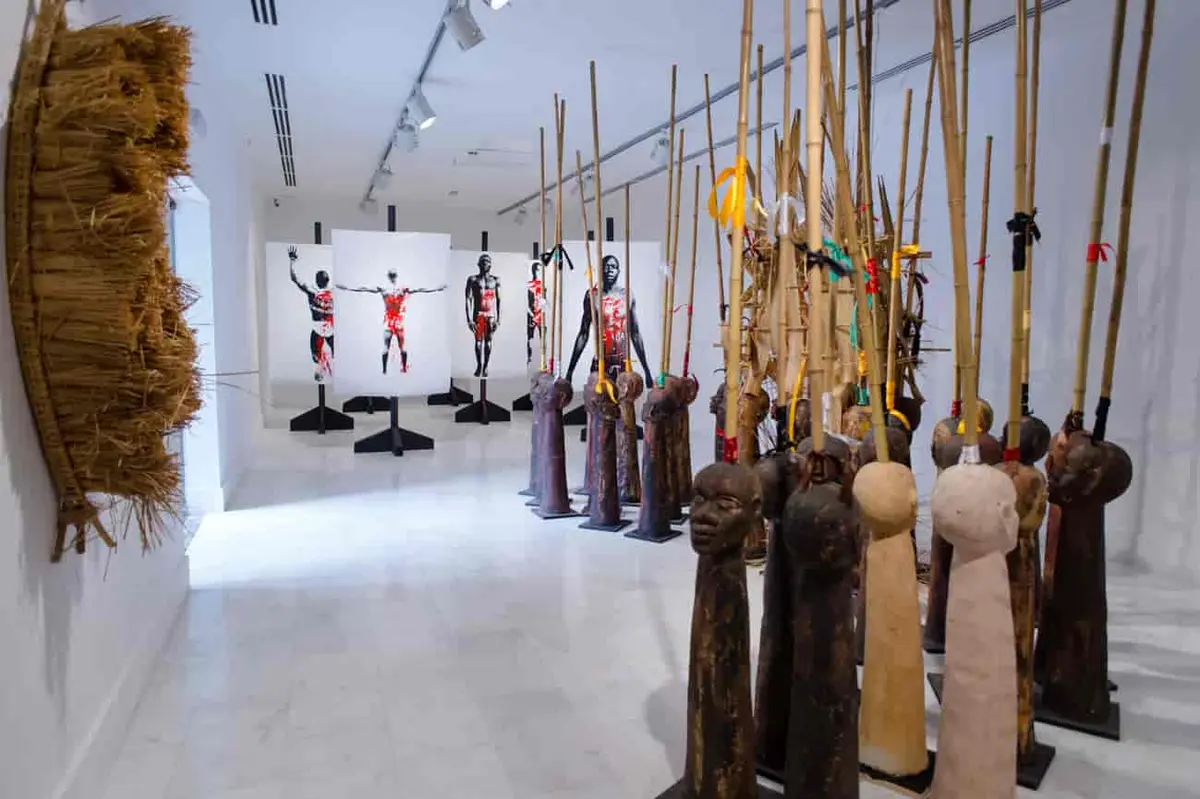
The Centro Atlántico de Arte Moderno (CAAM), in collaboration with Casa África, presents the largest exhibition project developed so far in Europe centered on the work by artist Jack Beng-Thi. The exhibition is organized in the context of the ongoing collaboration between the two institutions in the Grand Canaria Island for the dissemination of African culture. Commissioned by Orlando Britto-Jinorio and Nilo Palenzuela, this grand artistic project includes a selection of about thirty works by Beng-Thi brought to Gran Canaria from the island of Reunión. The works will be on display throughout the fall at Casa África and later at the headquarters of CAAM. The first part of the exhibition at Casa África consists of a selection of about a dozen African-inspired pieces that will be on display from October 19, 2018 to February 24 2019. The second part of the exhibition project will open in the month of December at the main space of CAMM. It will include an important selection of Beng-Thi's works that will be connected with several contexts and themes. Jack Beng-Thi (Reunión, 1951) is a multidisciplinary artist trained as a sculpture. He lives and works in Reunión, an island located to the east of Madagascar, where several cultures meet. He is of Indian, Chinese-Vietnamese, African, and European descent. By relying on these cultural references, he has embarked on a permanent trip as a contemporary artist-anthropologist. With a professional trajectory spanning more than thirty years, Jack Beng-Thi is one of the most important representatives of what tradition and modernity mean for a work system. Along with the undeniable quality of his proposals, this results in works that are extraordinarily appealing and unique. His vast body of work offers important historic, social, political, and ecological insight into the various geographies in which he has worked. Jack Beng-Thi is passionate about the history of his ancestors: slaves and inhabitants of the Reunión island. Inspired by this genealogy and looking for clues to his existence, Beng-Thi has tirelessly searched through archival material in his native island and in Paris in an attempt to rescue men and women from the forgotten archives of the colonial administration, to reclaim their identities and to reincorporate them in the collective memory. He is interested in the idea of the body, in inhabiting a completely free space. "I create installations as a way to free the body." His work evidences the impact that colonization continues to have on the idea of the body. The process of reconstructing the body in order to reclaim its place in memory constitutes an important aspect of his oeuvre.