Art NotesMay 9, 2019
"Down These Mean Streets: Community and Place in Urban Photography"
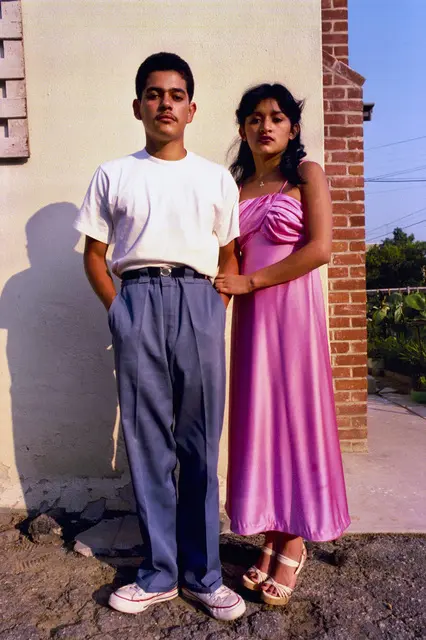
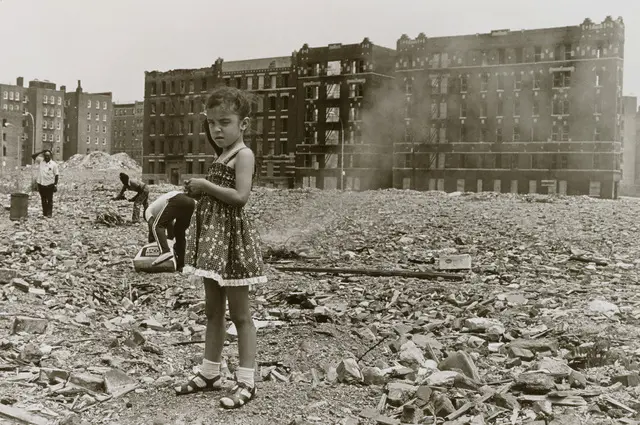
El Museo del Barrio in New York reopened its doors last September with a crucial exhibition about photography, activism, and social resistance. Entitled "Down These Mean Streets: Community and Place in Urban Photography" and organized by E. Carmen Ramos, deputy chief curator and curator of Latino art at the Smithsonian American Art Museum (SAAM), the show featured works by ten Latino photographers: Frank Espada, Hiram Maristany, Winston Vargas, Oscar Castillo, Perla de Leon, John Valadez, Camilo José Vergara, Anthony Hernandez, Ruben Ochoa, and Manuel Acevedo. The photographs portray metropolitan areas in the United States during the Cold War, specifically from the 1960s to the beginning of the 1980s. Through various formats and techniques, the images challenge the famous convention that celebrates the economic, cultural, and imperial prosperity of the US following World War II. In fact, the exhibition shows the opposite side of such booms, revealing at the same time that economic growth was actually not (and it is still not) enjoyed by everyone, least of all immigrants or the descendants of Latino communities. The decadent, abandoned and inhabitable environments depicted in some of the photographs stand in stark contrast to the notions of collectivity, community, and resistance found in other images. They denounce—while also attempting to transform at least in the imagination—the dark side of gentrification and urban development. From depictions of devastation in the South Bronx in New York City, like in the photographs by Perla de León (New York, 1952), to the broad and empty streets captured by John Valadez (Los Angeles, CA, 1951), where teenagers "expose" themselves to the photographic camera as if it were a weapon—a crime—the exhibition "Down These Mean Streets" is highly relevant for three reasons. Not only it is shown during an important moment for a Latino art that rapidly beings to be incorporated into academic discourses and exhibition spaces through forums, conferences, and publications; but its esthetic and social content is essential to consider such "boom." At the same time, it is equally relevant that this show inaugurated the much-anticipated reopening of a museum whose central mission actually stemmed from the demands and cultural desires Latino communities. In 1967, Afro-Latino writer of Puerto Rican and Cuban descent, Piri Thomas, who was born and grew up in Harlem (also known as El Barrio), wrote an autobiography titled "Down These Mean Streets." These images began with that book and expanded on it—these images represent a biographical story about streets, neighborhoods, and experiences shared by many.
Gallery