AwardOctober 29, 2019
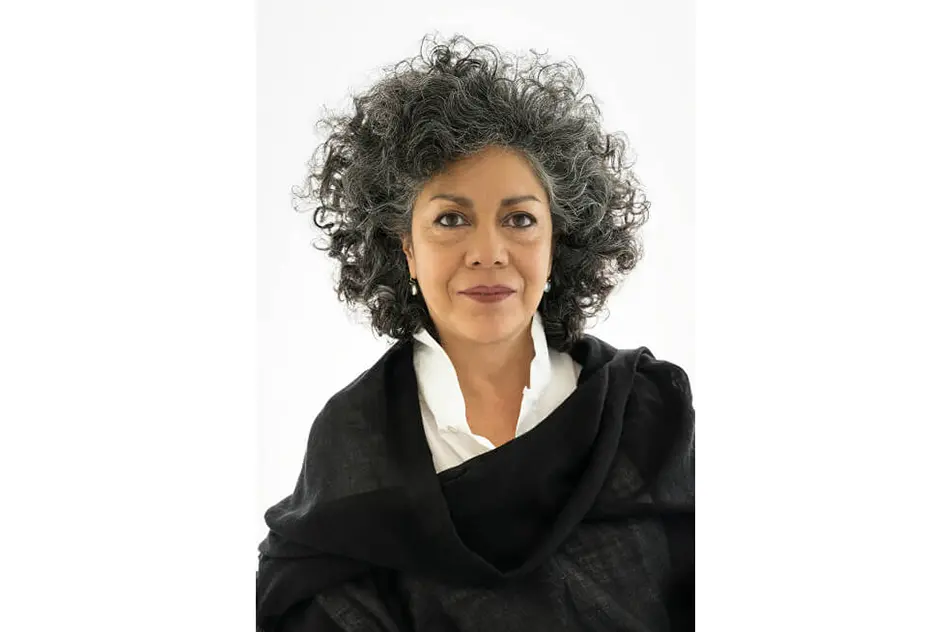
Doris Salcedo, Possehl Prize 2019
Colombian artist Doris Salcedo has just received the Possehl Prize for International Art, the first one to be bestowed by the Lübeck Foundation. It will be awarded every three years to living artists of local and international prestige, either for their entire life's oeuvre, a specific artwork, or a series of exceptional works. The award is grounded in outstanding artistic analysis and a sustained achievement during more than a decade. The Possehl is dedicated to artists working within the categories of Sculpture, Installation, New Media, and Performance, as well as diverse forms of artistic activism. Intermediate references to various types of artistic expressions in a project as a whole are also considered. The prize consists of 25,000 euros in cash and a solo exhibition at the Kunsthalle St. Annen in Lübeck.
The decision was made by an international jury whose members were Stephan Berg, artistic director of the Kunstmuseum Bonn; Hannah Firth, director of Cardiff Chapter; Anette Hüsch, director of the Kunsthalle Kiel; and Oliver Zybok, director of the Overbeck-Gesellschaft in Lübeck. The jury—after studying the trajectories of seven female and five male artists of nine different nationalities, stressed that the work of Salcedo—born in Bogotá in 1958—is of “the highest relevance to our present time through objects, sculptures and large, static installations” that explore the effects of violence and marginalization in her native Colombia and other regions of the world. She has exhibited her work at the Tate Modern (London, 2007) and the Guggenheim Museum (New York, 2015).
As part of her prize, until November 3 of this year, Doris Salcedo is presenting the exhibition "Tabula Rasa I-IV" at the Kunsthalle St. Annen, the artist's first solo show in Germany.
The series called "Tabula Rasa I-IV" deals with the violence suffered by many women during the civil war in her native country and the ongoing “reign of tyranny”. For these works she destroyed tables—symbolic of life's vicissitudes—and reassembled the pieces with glue by means of a small-scale working process. The reworked objects show clear traces of their destruction. These everyday artifacts implicitly and metaphorically carry the impossibility of reversing an act of violence once it has been committed.
The show also presents works such as A flor de piel (2011-2012), a large blanket of carefully preserved and sewn rose petals, and Plegaria muda (Silent Prayer, 2008-2010), a stack of wooden tables with blades of grass growing from them; both works remind us of the strength, beauty, and fragility of life, while evoking the bitter fate of many individuals. The exhibition also presents some works from her series Disremembered (2014-2015), made of raw silk and thousands of embroidery needles. Here, too, the pain caused by missing people is paramount. The starting point for these pieces was a series of interviews with mothers who lost their children to armed violence. Doris Salcedo works in a very thorough and precise manner, not only from an aesthetic standpoint, but also in the terms of practical execution. For example, she turns the victims of violence into the protagonists of her pieces, giving them a voice.
The decision was made by an international jury whose members were Stephan Berg, artistic director of the Kunstmuseum Bonn; Hannah Firth, director of Cardiff Chapter; Anette Hüsch, director of the Kunsthalle Kiel; and Oliver Zybok, director of the Overbeck-Gesellschaft in Lübeck. The jury—after studying the trajectories of seven female and five male artists of nine different nationalities, stressed that the work of Salcedo—born in Bogotá in 1958—is of “the highest relevance to our present time through objects, sculptures and large, static installations” that explore the effects of violence and marginalization in her native Colombia and other regions of the world. She has exhibited her work at the Tate Modern (London, 2007) and the Guggenheim Museum (New York, 2015).
As part of her prize, until November 3 of this year, Doris Salcedo is presenting the exhibition "Tabula Rasa I-IV" at the Kunsthalle St. Annen, the artist's first solo show in Germany.
The series called "Tabula Rasa I-IV" deals with the violence suffered by many women during the civil war in her native country and the ongoing “reign of tyranny”. For these works she destroyed tables—symbolic of life's vicissitudes—and reassembled the pieces with glue by means of a small-scale working process. The reworked objects show clear traces of their destruction. These everyday artifacts implicitly and metaphorically carry the impossibility of reversing an act of violence once it has been committed.
The show also presents works such as A flor de piel (2011-2012), a large blanket of carefully preserved and sewn rose petals, and Plegaria muda (Silent Prayer, 2008-2010), a stack of wooden tables with blades of grass growing from them; both works remind us of the strength, beauty, and fragility of life, while evoking the bitter fate of many individuals. The exhibition also presents some works from her series Disremembered (2014-2015), made of raw silk and thousands of embroidery needles. Here, too, the pain caused by missing people is paramount. The starting point for these pieces was a series of interviews with mothers who lost their children to armed violence. Doris Salcedo works in a very thorough and precise manner, not only from an aesthetic standpoint, but also in the terms of practical execution. For example, she turns the victims of violence into the protagonists of her pieces, giving them a voice.