ExhibitionFebruary 19, 2010
Distancia Relativa: Northern Art
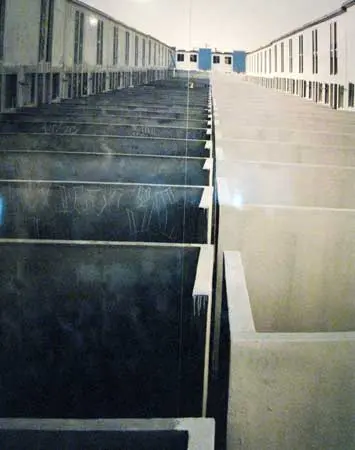
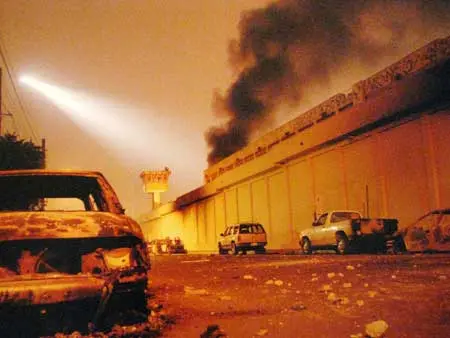
The collective exhibition curated by Marcela Quiroz, entitled Distancia Relativa (Relative Distance), was presented in the Entijauanarte Art Festival inside the pavilion expressly created for the event by architect Gabriel Martínez. The exhibition included works by 14 artists, who were chosen following Quiroz¿s curatorial guidelines. According to the curator, despite the geographical, political, or emotional distances reflected in any of our daily activities, the point of view of the actor and receptor of specific circumstances is crucial when reading such events. One of the exhibition's main achievements was the eloquent connecting thread that permitted dialogue among the works under exhibition. The curatorial discourse proposes an eminent relativity based on a particular point of view. Nevertheless, the role of individuality here is peripheral in favor of a more inclusive global and general perspective; this is an aspect that strengthens the curatorial thesis while leading to a coherent and solid exhibition. The majority of the creators are young artists born in the Mexican states of Baja California, Sinaloa, Sonora, Chihuahua, Coahuila, or Nuevo León. Distancia Relativa is presented alongside other theatrical, musical, and performative events. Among the free events presented, the one jointly performed by the Baja California Orchestra and the Nortec Collective; under the direction of the Cuban Maestro Iván de Prado and arranged by Alberto Núñez-Palacio, in collaboration with Bostich and Fussible from the very famous Nortec Collective, whose prominent visitors enjoy several parties, the sale of artifacts by local artists, and street or staged dances. There were also day trips to regional vineyards, as well as gastronomic demonstrations from a new type of cuisine called Baja Med that combines the traditional regional cuisine based on seafood (mainly lobster, tuna, and marlin). Entijuanarte will once again illuminate the city that is furthest away from the Mexican capital, as a sixth edition of the event will be celebrated next October. According to Quiroz, Distancia Relativa seeks to locate and interconnect some of the many dimensions of relativity found in the distances ¿ whether emotional, physical, spatial, or temporal ¿ that coexist in a border town, and as it is usually the case with any existence on the verge, each can only be contextualized and observed in relation to the others. Some of the exhibited works that underscored this curatorial point of view concerning the relativity of the distances include those by Gabriel Boils (Ciudad Victoria, Tamaulipas, 1974), Azzul Monraz (Tijuana, Baja California, 1979); Aldo Guerra (Monterrey, Nuevo León, 1978); Livia Corona (Ensenada, Baja California); Isaac Contreras (Culiacán, Sinaloa, 1984); David Maung (Chicago, Illinois, 1961); Hugo Lugo (Los Mochis, Sinaloa, 1974); Franklin Collao (Tijuana, Baja California, 1982); Miguel Fernández (Hermosillo, Sonora, 1986), and the Japanese artist living in Tijuana for the past five years, Shinpei Takeda.
Gallery