Art NotesMay 21, 2014
Dagmara Wyskiel
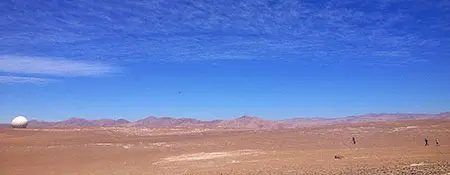
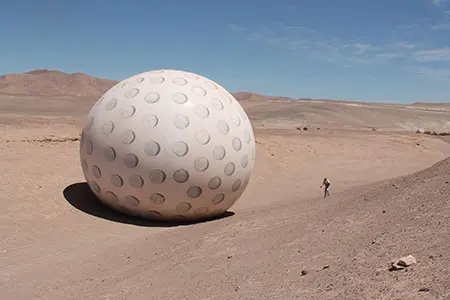
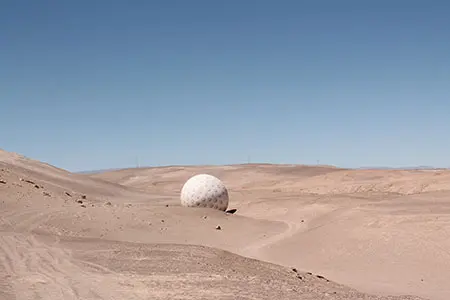
Before entering the exhibition Mixed Game by Dagmara Wyskiel (1974), it is essential to note the context from which this Polish artist, who has been in Antofagasta (Chile) for a little over a decade, operates. One could say that it is from the desert, both geographically and metaphorically, with the interest of generating an expansive footprint. Antofagasta is a coastal city in the northern part of Chile, and one of the epicenters of a mining industry that has generated remarkable economic growth but that, at the same time, has also created problematic situations, such as the sharp rise in immigration and environmental degradation. This area is in the heart of the Atacama Desert. As Director of Se Vende (a platform for contemporary art and collective work), Wyskiel promotes new artistic practices in a context equally deserted of art: with just one or two specialized venues and no art school to speak of (the closest is in Valparaíso, about a thousand miles away), she is constantly facing a certain conservatism in the environment. Aptly adept in (self) management and partnering, Wyskiel has nonetheless been able to engage new artists in exhibitions and group actions, as well as cultural institutions and private businesses. Her personal work has also undergone a significant evolution. It relies on several formats and strategies, as it approaches both the action of art, installation, object art, printing and video; as well as interventions in natural landscapes and urban spaces. Some of the constant characteristics in her work are associated with the change in scale, a play with the apparent and the real, references to water, a spirit of criticism, irony and a fine sense of humor; attributes that has made her relevant both at the national and international levels, as her work has been shown at the Museo de Arte Contemporáneo in Santiago, the Chaco fair, the Museo Juan Manuel Blanes in Uruguay, and at the Fifth Moscow Biennale of Contemporary Art. From the local to the global, the territory in all its dimension has been the subject of her work along with references to time and power. From around Quillagua, an Atacama village recognized by NASA as the driest human habitat on Earth, Mixed Game appears as a summa of all this process. The proposal consists of two phases: an intervention performed in October 2013 in the desert and a video installation with the record of that action that will be presented in 2014 at the gallery of the University of Fine Arts in Krakow. First is the work with a giant golf ball—14 meters in diameter, rubber, inflatable structure—that goes through this minimalist landscape aimlessly, and ends before a monumental crater that was allegedly caused by a meteorite thousands of years ago. In the video, the scale and sense of reality is lost: the ball could very well appear to be rolling through the desert after being hit by an anonymous golfer. However, everything suddenly turns into another planet and the ball becomes a strange inhabitant rolling eternally through that immensity. Even philosophical speculations can be inferred. With a minimalist aesthetic, the work pays homage to Land Art, as it succeeds in poetically facing the smallness of our existence against the infinity of the universe. The object is both a political and social signifier of the history of northern Chile: the place also experienced a great economic boom during the early Twentieth Century through the exploitation of nitrate, an industry for the most part managed by British companies that introduced some cultural traits like Charleston, tea time and also golf; customs that highly contrast the situation of exploitation and poverty endured back then by workers—indigenous people from the highlands, as well as immigrants from China, Peru, Bolivia and southern Chile. While Quillagua is a latent context, its situation also gives the work meaning....
Gallery