ExhibitionFebruary 5, 2015
Carlos Garaicoa. “Episodio # 3 Reflexión – Refracción”
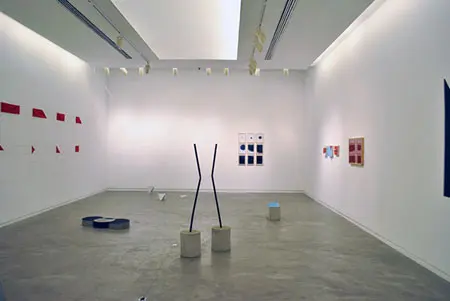
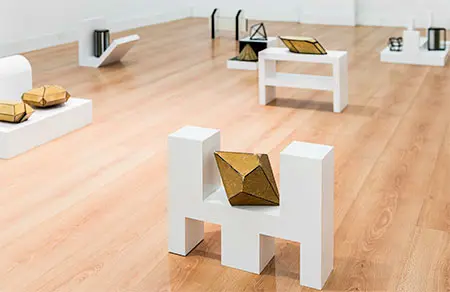
Carlos Garaicoa's show, Episodio # 3 Reflexión – Refracción, is part of a larger exhibition project curated by Roc Laseca and titled Arquitectura del desarraigo." The project was presented in 2014 at Saludarte Foundation / Ideobox Artspace in collaboration with Universidad de los Andes and the National media Museum (UK). Arquitectura del desarraigo opened with an exhibition of works by Juan Fernando Herrán, Episodio # 1, followed by Episodio # 2, by Marcius Galán, and now the cycle closes with Episodio # 3 (Reflexión – Refracción), developed by Garaicoa. In Episodio # 3 (Reflexión – Refracción), Garaicoa reflects, like Marcius Galán did in Episodio # 2, about today's architecture and urban planning, and their conflicted relationship with the socio-cultural habitat of citizens in the global village. This is, precisely, one of the main ideas in the curatorial concept behind Arquitectura del desarraigo, inspired by a critical view of the ideologies that have marked architectural and urban production since early modernity through our times. Expanding on this reflection, Episodio # 3 (Reflexión – Refracción) contemplates in its design a display featuring a series of site-specific interventions (drawings in thread on the wall) as well as the serried Lo Viejo y lo Nuevo, which includes a collection of Nineteenth Century French engravings intervened by the author. Added to this is a series of marble and glass sculptures, geometric in their design, exhibited for the first time. Garaicoa's exhibition is divided in two sections. The first contains the series Lo Nuevo y lo Viejo (2011) and the second one features the series Cúbico, Tetragonal, Ortorrómbico, Monoclínico, Triclínico, Romboédrico y Hexagonal (2014), produced specifically for Arquitectura del desarraigo. Putting Episodio # 3 (Reflexión – Refracción) in perspective, we can say that in the series Lo Nuevo y lo Viejo Garaicoa reinterprets a cartography of motion, tendencies, emblematic constructions, and architects who have influenced the history of modernist architecture. Meanwhile, in Cúbico, Tetragonal, Ortorrómbico, Monoclínico, Triclínico, Romboédrico y Hexagonal he reflects on formal elements, typologies created on the basis of geometric motifs deployed throughout the history of modern architecture, such as, for example, cubes, diamonds, and hexagons, taken as images and codes of an architectural language in constant mutation. Connecting the three episodes that form Arquitectura del desarraigo, we find, through the varying proposals of Juan Fernando Herrán, Marcius Galán, and Carlos Garaicoa, three approaches, three ways of looking traversed by concerns about our habitat in Twenty-First Century metropolis. Their uncontrolled expansion, urbanistically and architecturally, the causes of which reveal the conflict between, on the one hand, the cities' collective industry, affected by speculation, and on the other, the real need of the citizens that inhabit them. In other words, the need to organize urban life around the value of public spaces, as a common territory, as the prerogative of the value of sociability within a socio-cultural space is multiple, plural, and invites and promotes the inclusion of all communities in the city's map.
Gallery