Art NotesMay 4, 2017
Avenida Paulista
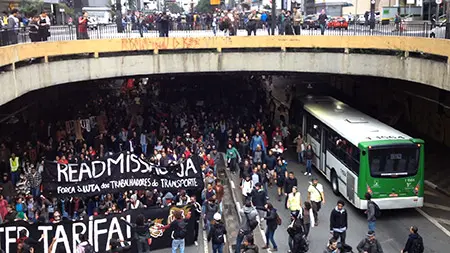
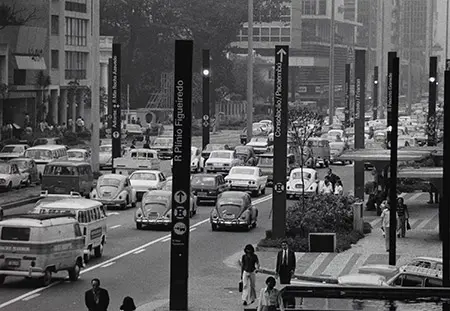
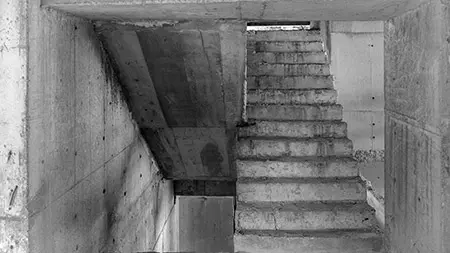
When, surrounded by fragments from everyday life, the urban imaginary activates scenes from the city of São Paulo, the historical testimony of a certain place—unique and meaningful to many of its millions of inhabitants and visitors—becomes recurrent, and the omnipresent, protagonic and active role of Paulista Avenue is almost impossible not to mention. Beginning with the title "Paulista Avenue," as the historic core, nervous center and dorsal spine of the project, the Museu de Arte de São Paulo Assis Chateaubriand (MASP) presented to the public an exhibition that brought together in a single event two important lines of work: a selection of works from the Museum's own collection and other pieces from several public and private collections, and a group of commissioned works. As a whole, the works established an open dialog with the densities of this central artery of the city. Both as strategic artery of the metropolis and the stage for clashes that have attested to the changes of social and political moods in the last decades, the avenue always reemerges paradigmatic, accelerated, and committed to forms of plural coexistence. For the curators the exhibition, organized in the context of the seventieth anniversary of the MASP's foundation, fulfilled its purpose as a group show capable of establishing a direct dialog between the collection and the city. Created in 1947, the institution found its most accurate translation in the headquarters inaugurated in 1968 at the Paulista Avenue, in a project created with reinforced concrete by Italian-Brazilian architect Lina Bo Bardi. Standing out from these two lines of works are: the selection belonging to the museum's collection, the emblematic photographs by Luiz Hossaka, Juca Martins, and Mauricio Simonetti, alongside dozens of acrylics and oils on canvas, collages, and prints by many creators who also captured the complex network of that road in trance. The highlight of the exhibition included a focus on the commissioned projects, like those created by artists Dora Longo-Bahia, Lais Myrrha, and Graziela Kunsch, among other guest artists; works that revealed unsettling gazes centered on the challenges that the occasion posed. Among the fourteen projects specially created for the exhibition—by artists like Ana Dias Batista, André Komatsu, Cinthia Marcelle, Daniel de Paula, Ibã Huni Kuin with Bane and Mana Huni Kuin, Luiz Roque, Marcelo Cidade, Marcius Galan, Mauro Restiffe, Renata Lucas and Rochelle Costi with Renato Firmino—three creators intensified the debate about the crisis of imaginaries at the avenue. Dora Longo Bahia, Graziela Kunsch, and Lais Myrrha explored the concept of the exhibition by proposing readings on the social, political and economic impediments that are present in the avenue. For Graziela Kunsch, the invitation offered her the opportunity or resuming a process that had remained latent. The video titled Túnel Av. Paulista – Dr. Arnaldo (Paulista Avenue Tunnel – Dr. Arnaldo, 2014) about the march by the Movimento Passe Livre [Free Pass Movement]—a nonpartisan social movement in Brazil that advocates a policy in favor of free public transportation for the people—projected on a large scale, shared the space with the work titled Pieza Recortada de la Rampa Anti-Moradores de Calle Usada como Apoyo de Piso en el Museo (Cut-out Piece of the Anti-Street Dwelling Ramp Used as Floor Support in the Museum,2017). Consisting of two concrete ramps placed in the exhibition space next to the video projection of the march, the piece brought to life the drama of an avenue that supports in any way it can the weight of decades of urban and social transformations in an almost asphyxiated city. In this manner, the group exhibition offers a critical gaze o...
Gallery