Book ReviewsNovember 6, 2023· By Katherine Chacón
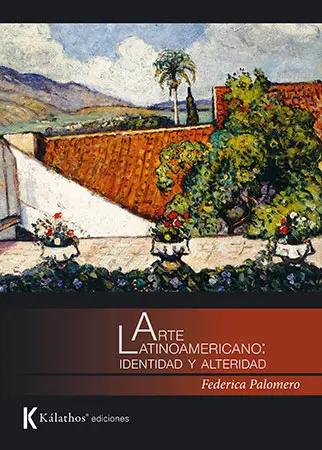
Arte latinoamericano: identidad y alteridad
With extensive knowledge gathered through many years of studying the history, culture, and literature of Latin America, Federica Palomero has undertaken the challenging task of exploring the main theses regarding the continent’s identity in her latest book, Arte latinoamericano: identidad y alteridad (Latin American Art: Identity and Alterity). Palomero takes the reader on a journey through ideas about how we have culturally defined ourselves, by examining the discussions that have fueled art movements, manifestos, essays, and artworks.
The book begins with a fundamental question: What does it mean to be Latin American and aware of possessing a distinct identity? In this first chapter, the author delves into the origin of the term ‘Latin American,’ highlighting the difficulties inherent in the naming of our culture. The main debates about our creative languages, foreign perspectives on Latin America, and the peripheral position of our cultural territory in relation to the Western traditions are addressed here.
The following chapter deals with Colonial Art and its specificities in Latin America, compared to its manifestations in Spain. Through clear examples, such as the arquebusier angels or the triangular-mantled virgins, Palomero describes the syncretic realm whereby a defeated culture managed to survive through art.
“Seres humanos” (Human Beings) is the title of the third and most extensive chapter of the book. It offers a historical and critical journey through representations of Latin Americans, starting with the unique paintings that portrayed the different castes, which idealized the racial crossbreeding produced in the New World. The author dedicates a significant part of this chapter to the theme of Indigenismo, describing the nineteenth-century origins of the way indigenous populations were aesthetically represented by the Academy, as well as Eurocentric illustrations produced by traveling artists who landed on this continent after the wars of emancipation. Indigenismo as an ideological project is extensively explored through the analysis of Amauta magazine and artists like José Sabogal. Mexican Muralism is also thoroughly examined here. Furthermore, the author discusses the significant influence that both movements had on the visual arts throughout the continent. Subsequently, Palomero addresses the representations of Afro-Americans, starting with the works of Puerto Rican colonial artist José Campeche. Notable observations are made regarding the works of Pedro Figari (Uruguay), Wifredo Lam (Cuba), and the Antropofagia movement in Brazil, led by Tarsila do Amaral and Emiliano Di Cavalcanti. The chapter concludes with the description of how whites and creoles were represented: from colonial times all the way to works by Francisco Narváez and other prominent modern artists in the continent.
After the wars of independence and the birth of nations, the academic canon became the official aesthetic language. Chapter 4 examines the different paths taken by nineteenth-century artists in countries such as Mexico, where a reassessment of the pre-Hispanic past took place; or Venezuela, with the emergence of an iconography that idealized the heroics of independence. Chapter 5 revisits the theme of the “new continent’s” landscape, reviewing the contributions of traveling artists, and particularly the presence of Camille Pissarro in Venezuela. The discussions on Puerto Rican artist Francisco Oller, the Venezuelan Circle of Fine Arts, and Armando Reverón deserve special attention. In the final chapter, Palomero critically recounts the abstract-geometric avantgardes, with a special emphasis on its two neuralgic centers: Argentina and Venezuela.
The author closes this well-researched essay by stating the following: “A definition of identity is still pending... We have studied such varied, contradictory, and at once complementary ways of being Latin American that... we prefer to speak of identities. An easy, perhaps too easy, way out would be to affirm that diversity is precisely the fate of any Latin American identity. We must also acknowledge that it is an elusive concept. Therefore, we conclude, along with Octavio Paz, that 'it is difficult to define what we are, but our works speak for us.”
Federica Palomero holds a Bachelor's and Master's degree in Art History from the University of Toulouse II-Le Mirail (Toulouse, France) and a Master's degree in Latin American Literature from Simón Bolívar University (Caracas, Venezuela). From 1985 to 2001, she worked at the Museum of Fine Arts in Caracas, where she held the positions of chief curator of Latin American Art and chief curator of Painting and Sculpture. From 2010 to 2014, she was executive director of the Morris E. Curiel Sephardic Museum in Caracas. She has taught at Universidad José María Vargas, Instituto Universitario de Artes Plásticas Armando Reverón, Universidad Metropolitana, and Universidad Central de Venezuela.
The book begins with a fundamental question: What does it mean to be Latin American and aware of possessing a distinct identity? In this first chapter, the author delves into the origin of the term ‘Latin American,’ highlighting the difficulties inherent in the naming of our culture. The main debates about our creative languages, foreign perspectives on Latin America, and the peripheral position of our cultural territory in relation to the Western traditions are addressed here.
The following chapter deals with Colonial Art and its specificities in Latin America, compared to its manifestations in Spain. Through clear examples, such as the arquebusier angels or the triangular-mantled virgins, Palomero describes the syncretic realm whereby a defeated culture managed to survive through art.
“Seres humanos” (Human Beings) is the title of the third and most extensive chapter of the book. It offers a historical and critical journey through representations of Latin Americans, starting with the unique paintings that portrayed the different castes, which idealized the racial crossbreeding produced in the New World. The author dedicates a significant part of this chapter to the theme of Indigenismo, describing the nineteenth-century origins of the way indigenous populations were aesthetically represented by the Academy, as well as Eurocentric illustrations produced by traveling artists who landed on this continent after the wars of emancipation. Indigenismo as an ideological project is extensively explored through the analysis of Amauta magazine and artists like José Sabogal. Mexican Muralism is also thoroughly examined here. Furthermore, the author discusses the significant influence that both movements had on the visual arts throughout the continent. Subsequently, Palomero addresses the representations of Afro-Americans, starting with the works of Puerto Rican colonial artist José Campeche. Notable observations are made regarding the works of Pedro Figari (Uruguay), Wifredo Lam (Cuba), and the Antropofagia movement in Brazil, led by Tarsila do Amaral and Emiliano Di Cavalcanti. The chapter concludes with the description of how whites and creoles were represented: from colonial times all the way to works by Francisco Narváez and other prominent modern artists in the continent.
After the wars of independence and the birth of nations, the academic canon became the official aesthetic language. Chapter 4 examines the different paths taken by nineteenth-century artists in countries such as Mexico, where a reassessment of the pre-Hispanic past took place; or Venezuela, with the emergence of an iconography that idealized the heroics of independence. Chapter 5 revisits the theme of the “new continent’s” landscape, reviewing the contributions of traveling artists, and particularly the presence of Camille Pissarro in Venezuela. The discussions on Puerto Rican artist Francisco Oller, the Venezuelan Circle of Fine Arts, and Armando Reverón deserve special attention. In the final chapter, Palomero critically recounts the abstract-geometric avantgardes, with a special emphasis on its two neuralgic centers: Argentina and Venezuela.
The author closes this well-researched essay by stating the following: “A definition of identity is still pending... We have studied such varied, contradictory, and at once complementary ways of being Latin American that... we prefer to speak of identities. An easy, perhaps too easy, way out would be to affirm that diversity is precisely the fate of any Latin American identity. We must also acknowledge that it is an elusive concept. Therefore, we conclude, along with Octavio Paz, that 'it is difficult to define what we are, but our works speak for us.”
Federica Palomero holds a Bachelor's and Master's degree in Art History from the University of Toulouse II-Le Mirail (Toulouse, France) and a Master's degree in Latin American Literature from Simón Bolívar University (Caracas, Venezuela). From 1985 to 2001, she worked at the Museum of Fine Arts in Caracas, where she held the positions of chief curator of Latin American Art and chief curator of Painting and Sculpture. From 2010 to 2014, she was executive director of the Morris E. Curiel Sephardic Museum in Caracas. She has taught at Universidad José María Vargas, Instituto Universitario de Artes Plásticas Armando Reverón, Universidad Metropolitana, and Universidad Central de Venezuela.