ExhibitionNovember 23, 2016
Anthropophagy and Modernity
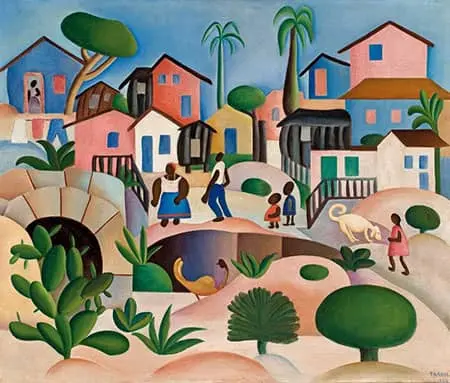
From November 25, 2016, to February 26, 2017, the Museo de Arte Latinoamericano (MALBA) in Buenos Aires presents the exhibition titled "Anthropophagy and Modernity." Articulated chronologically, the exhibition surveys Brazilian art through a selection of more than 150 works belonging to the Colección Fadel. Under the curatorship of Victoria Giraudo, Anthropophagy and Modernity ranges from the early manifestations of modernism in Brazil during the 1930s, to the search for autochthonous and migrant roots, international modernization and concrete abstraction during the 1950s, and to the rupture with the modern, with neo-concretism, the new figurations and conceptualisms, among other manifestations. The exhibition offers a panoramic view of different periods in Brazilian art, through paintings, drawings, sculptures, and objects by artists like Anita Malfatti, Tarsila do Amaral, Candido Portinari, Emiliano Di Cavalcanti, Víctor Brecheret, Maria Martins, Lygia Clark, Geraldo de Barros, Waldemar Cordeiro, Iván Serpa, Willys de Castro, Antonio Días, Rubens Gerchman, Hélio Oiticica, and Anna Maria Maiolino, among others. With over 3,000 pieces, the Colección Fadel is one of the most comprehensive Brazilian art collections. It is a private institution founded by Sérgio and Hecilda Fadel during the end of the 1960s. Since 2012, they have maintained a close relationship with the Museo de Arte de Rio (MAR), through Paulo Herkenhoff, its founding director. For more than a decade, Herkenhoff was curator of the Colección Fadel and opened the doors of the MAR with the exhibition titled "Constructive Will."