ExhibitionJune 11, 2019
Antonio Seguí
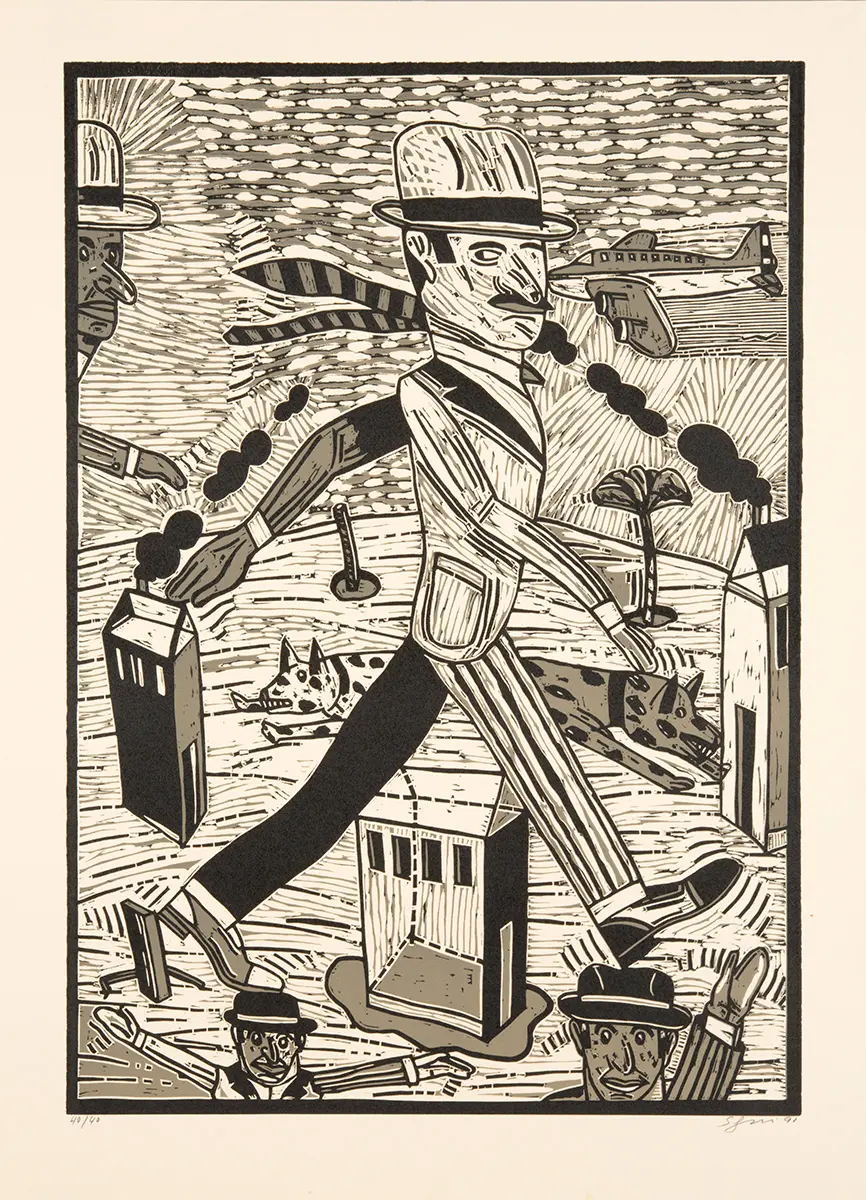
The nearly forty prints included in this exhibition are part of the more than 500 pieces (prints, portfolios, and illustrated books) that Antonio Seguí donated to the Bibliothèque Nationale de France (BnF). Organized in chronological order, the show sheds light on the diverse sources that have inspired this Argentinean artist; from Honoré Daumier and Otto Dix to comic strips and illustrations from the press. Based in France since 1963, after representing his country in the Third Paris Biennale, Seguí (Córdoba, Argentina, 1934) has a soft spot for engraving, which he has been working with since his "Mexican years." In fact, it was during his stay in Mexico (from 1958 to 1960) when he learned wood engraving, intaglio, and lithography. By the end of the 19th century a new generation of engravers abounded in the local scene. They were receptive to the social and political reality brilliantly reflected by José Guadalupe Posada, an artist whose work Seguí admired and collected. The Mexican context greatly influenced the Argentinean painter. The Escuela Mexicana (during the 1920s) and the Taller de la Gráfica Popular (founded in 1937) represented the two predominant currents of the mostly figurative, politically committed, critical, and satirical artistic production of the period. In Paris, the Atelier Clot, Bramsen & Georges would play an important role in the development of Seguí's lithographic work. There, he would rub shoulders with Latin American artists like Francisco Toledo and Guillermo Olguín (Mexico), and European artists like Antonio Saura (Spain) and Pierre Alechinsky (Belgium). The lithographs from the 1950s and 1960s often show compartmentalized spaces and text and are predominantly satirical in nature, humorous, and politically critical. During the 1980s, a few watercolor etchings rendered with a subtler palette introduced a character that would become a staple of the urban landscape: the famous "Don Gustavo." To this day, he inhabits that small stage for satire so appreciated by Seguí. The serigraphies from the 1990s, with their urban landscapes, confirm Seguí's love for all techniques and, most importantly, the enormous creative ability of an artist who never ceases to amaze us.