ObituarySeptember 11, 2014
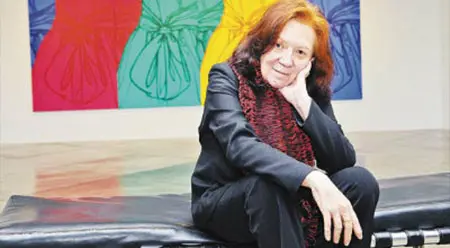
Ana Mercedes Hoyos
Ana Mercedes Hoyos' exhibition Aurora, curated by Camilo Chico Triana, was held in 2011, at the José Martí Memorial in Cuba. When I saw it, I understood the work of an artist deeply committed to the history of her country, Colombia, and in particulat with its afro-descendent population, specifically in San Basilio de Palenque. I encountered works that presented details of Afro-Colombian dress and works that alluded to the terrible journey of slaves across the Atlantic; what caught my attention most powerfully were works that referred to the slave trade, like "Commercial Trangle" (2005), which highlights the routes followed by slave ships between Europe, Africa, and the Americas. The story narrated in that exhibition situated Hoyos at the forefront of a lineage of artists who have explored negritude in Colombian culture, among which are Nelson Fory, Liliana Angulo, Trinidad Caballero Beaine, Fabio Melecio Palacios, Mercedes Angola, among others. From that point on I developed an interest in Hoyos, an artist promoted in her time by Marta Traba and later by Eduardo Serrano and Edward J. Sullivan, among other art critics. Around this exhibition there was a conference, where we met and began a close dialog about her work, sharing many encounters with her friends, her husband Jacques Mosseri, and her daughter Ana. At her home-workshop in the neighborood of La Macarena, I was fortunate enough to see her paintings from the 1960s and 70s: her famous windows and her atmospheres (the latter true masterpieces). Hoyos' works from that period were carefully selected and exhibited in Bogotá in La geometría como pretexto, an exhibition curated by Osbel Suárez and Eduardo Serrano in 2012, which positioned Hoyos in the place she deserves in the history of Colombian painting. Her latest exhibition. Tres-D, was at Galería Nueveochenta in Bogotá. The three exhibitions I have mentioned were preceded by a large retrospective at the Museo de Arte Moderno in Mexico, featuring drawings, paintings and sculptures; it must be noted that sculpture occupied an imporant place in Hoyos' artistic universe, a natural development when we consider the treatment of objects and shapes in her painting. I still remember one of those encounters, when Ana Mercedes, filled with pride, picked up a box with several book-sized catalogs and said: "Look, I just received this, sent by Edward Shaw, and one is for you". The luxurious edition of Pintura contemporánea latinoamericana (2011) gathers the most selected exemplars of painting in the continent as represented in Shaw's famous collection. Indeed, Hoyos' works was placed next to Portinari, Bravo, Kuitca, Botero, Seguí, Amaral, Obregón, Cárdenas, Torres-García, among others. I realized I was in the company of an artist whom current critics have neglected unjustly, centered as they are on the political art she questioned. And I appreciated the critical, rebellious spirit of an artist of her time, talented, humanistic and, above all, mistrustful of the status quo. Ana Mercedes Hoyos would have liked to receive a Lumbalú for her farewell, these days when even the moon seems to grieve her: nine nights when the women of San Basilio de Palenque would sing to her with melodious and melancholy voices: "Ay, déjame llorar...", accompanied by drums and the claping of hands, rhythmic swaying of hips. Thos same afro-Clombian women, large-bodied and clad in joyful colors, who work tirelessly selling fruit in the beaches of Cartagena in order to feed their children. Hoyos became intereste din them when she saw racial discrimination in the United States, because in Bogotá these populations are rendered invisible (and, of course, ever more discriminated against). Her work, then, devoid of any exoticism, started to de...