América Latina 1960 - 2013
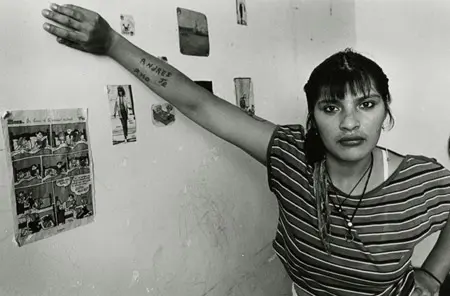
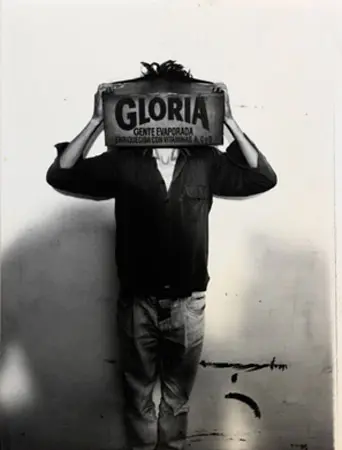
From November 19, 2013 through April 6, 2014, Fondation Cartier pour l'art contemporain presents América Latina 1960 – 2013, in coproduction with Puebla, Mexico's Museo Amparo and in partnership with the Institut des Hautes Études de l'Amérique latine (IHEAL), with the collaboration of Ángeles Alonso Espinosa and Alexis Fabry. The exhibition presents a new perspective on Latin American photography from 1960 to today, through the prism of the relationship between texts and photographic images. Bringing together more than seventy artists from eleven different countries, the show reveals the great diversity of photographic practices, presenting both the work of photographers and that of contemporary artists.
Latin America has always fascinated European observers as much as it has mystified them. While the prevalent interest is often about the region's past, and in particular its pre-Columbian past, there is no doubt that contemporary Latin American culture is receiving growing attention, even if the historical circumstances surrounding its production are often less widely explored. The period from 1960—immediately following the Cuban revolution—to today, marked by political and economic instability, has seen a succession of revolutionary movements and repressive military regimes, the emergence of guerilla movements as well as transitions toward democracy.
In four thematic sections—Territories; Cities; Informing/Denouncing; Memory and Identity—América Latina explores the multiple ways in which Latin American artists, moving beyond traditional photographic technique in order to explore their world, appropriated a wide array of media such as photo-offset, silk-screening and collage, performance, video, and installation. In the 1980s the Chilean artist Eugenio Dittborn created ''airmail paintings'' which were folded up and sent all over the world, circumventing Chile's cultural isolation under Pinochet. As for Miguel Rio Branco, a figurehead of Brazilian photography, he has depicted the underclass of a two-tiered society in a highly poetic manner. Brazilian artist Regina Silveira brings to bear the stereotypes that are commonly associated with Latin America in To Be Continued… (Latin American Puzzle), a mural work in the shape of a large puzzle, created using images extracted from magazines and tour guides. With a more traditional approach, Venezuela's Paolo Gasparini captures the visual cacophony generated by the speed of urban development. For his part, Argentine artist Juan Carlos Romero reproduces in Violencia images taken from mass-circulation press to denounce the frontal violence of Argentina's society. Finally, let's mention Bocas de ceniza, a video by Colombia's Juan Manuel Echavarría, a filmic portrait of men who have decided to tell, via poems and songs, their personal experience of violence in the guerrillas. With more than 500 works on exhibit, this show puts on display the vitality of Latin American art and the region's artist's significant legacy, revealing the span of their influence beyond their cultural or geographic boundaries.
Through a Fondation Cartier initiative, Paraguayan photographer and filmmaker Fredi Casco traveled throughout Latin America to make thirty exclusive interviews, for a detailed portrait of each artist. An exhibition catalog has been published, featuring essays by Luis Camnitzer, Olivier Compagnon, and Alfonso Morales.
Gallery