ExhibitionJune 6, 2022
Alfredo Volpi: Between the Modern and the Popular
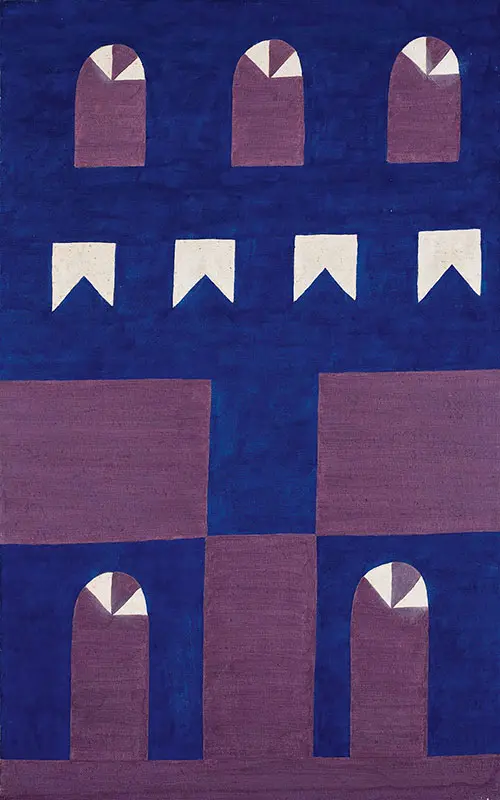
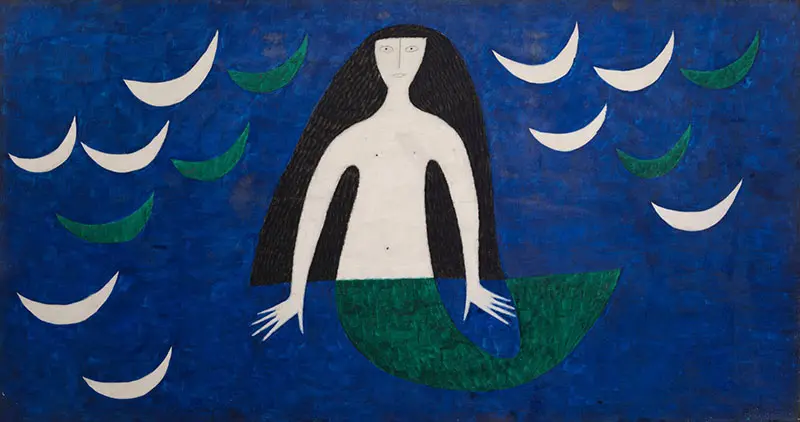
The survey exhibition, curated by Tomás Toledo, chief curator, MASP, presents five decades of the oeuvre by Alfredo Volpi (Lucca, Italy, 1896–São Paulo, 1988) divided into seven non-chronological thematic sections: Saints; Portraits; Seascapes; Nautical and Playful Themes; Urban and Rural Scenes; Façades; and Flags and Masts. The exhibition delves through 96 paintings into the artist’s interest in images, characters, and narratives from Brazilian popular culture.
Volpi’s family migrated from Italy to Brazil when he was a child, settling in the neighborhood of Cambuci in São Paulo. Before beginning his artistic career, Volpi worked in construction, specializing in decorative wall painting. Self-taught, he started to paint in 1911. His interest in popular themes increased in the 1940s when he began to paint religious portraits, representations of popular festivities—including his famous flags—and façades of Brazilian vernacular colonial architecture.
Volpi was a prolific artist with an extraordinary mix between the modern and the popular. On the one hand, the artist established a dialogue with the tradition of Western painting, especially Italian art from the Middle Ages and the Renaissance, and Brazilian Modernism. On the other hand, with its formal synthesis, his work introduced references from popular culture, an aspect that this exhibition seeks to highlight.
Alfredo Volpi: Between the Modern and the Popular is part of MASP’s two-year program dedicated to Brazilian Histories in 2021–22, during the bicentennial of the country’s independence in 2022.
Volpi’s family migrated from Italy to Brazil when he was a child, settling in the neighborhood of Cambuci in São Paulo. Before beginning his artistic career, Volpi worked in construction, specializing in decorative wall painting. Self-taught, he started to paint in 1911. His interest in popular themes increased in the 1940s when he began to paint religious portraits, representations of popular festivities—including his famous flags—and façades of Brazilian vernacular colonial architecture.
Volpi was a prolific artist with an extraordinary mix between the modern and the popular. On the one hand, the artist established a dialogue with the tradition of Western painting, especially Italian art from the Middle Ages and the Renaissance, and Brazilian Modernism. On the other hand, with its formal synthesis, his work introduced references from popular culture, an aspect that this exhibition seeks to highlight.
Alfredo Volpi: Between the Modern and the Popular is part of MASP’s two-year program dedicated to Brazilian Histories in 2021–22, during the bicentennial of the country’s independence in 2022.
Gallery