Allegory of Bad Government
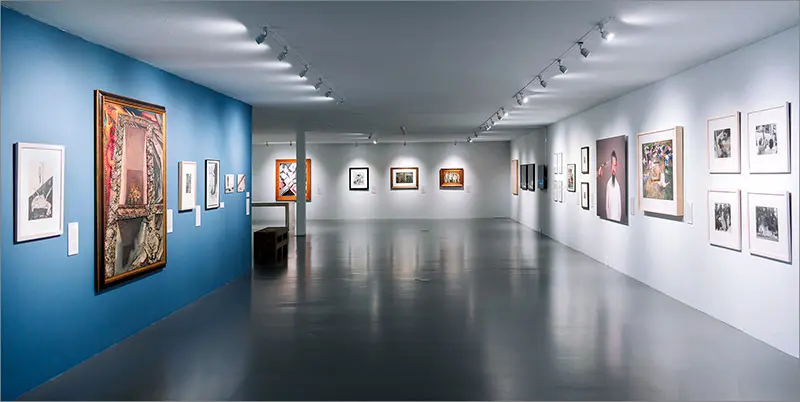
Since 2019 this exhibition project was developed by curator Jesse Lerner, filmmaker, documentary producer, and researcher. He conducted a review of the collection of the Museo de Arte Carrillo Gil (MACG) as a dialogue between modern and contemporary works, between the different generations and origins of the selected artists, between works from this collection and other collections, between iconic works and other lesser-known ones, to reflect on the temporal and structural continuity of the contextual impacts of the decisions of rulers and politicians. The exhibition opened to the public in August 2021, with the first round of works that will be on view until January 2022, followed by a rotation of works until the exhibition closes in May.
The starting point is the Gothic murals of Ambrogio Lorenzetti made in 1338-39 in the municipal palace of Siena in which he developed visual contrasts between good government (figures and motifs of peace, concord, generosity, justice, joy, and representation of the common good) and bad government (with visual elements that allude to shortage, violence, misery, fear, the tyrant). This author died of the plague in 1348.
Each nucleus establishes specific interlocutions with the works' qualities, material, and disciplinary diversity (painting, engraving, collage, sculpture, photography, video, and film are exhibited).
The first theme is the tyrant figure; different critical versions of this social actor are exhibited, alluding to historical figures and processes in different latitudes, with works by José Clemente Orozco, Josep Renau, Eduardo Menz, Leo Ferrari.
Later, the impact of bad government in the city is discussed, with works by artists such as Héctor García, Teresa Margolles, Canon Bernáldez, Miguel Calderón, Joseph Martínez, Kati Horna, David Alfaro Siqueiros, and the Los Ingrávidos collective, among others, which allude to processes of violence, precariousness, and repression.
The next aspect reviewed was the impact of bad governance on the countryside, the provinces, and areas with indigenous, mestizo, and rural populations, which included works by Edgardo Aragon, Karina Juarez, Bruno Varela, among others, dealing with discrimination, forced disappearances, inadequate management of natural resources and infrastructure for their use, and environmental damage.
Jesse Lerner put in parallel in this exhibition the contents of Lorenzetti's murals and his death by an epidemic, with the current pandemic conditions, the world social crisis they have raised and the critical thinking of urgent political issues, their management and looking at and dismantling abuses of power in it. The re-reading of the MACG collection is the tool with which she explores the sensitive and reflexive potential that detonates the allegorical condition of works that articulate abstractions from their concrete features.
Eugenia Macias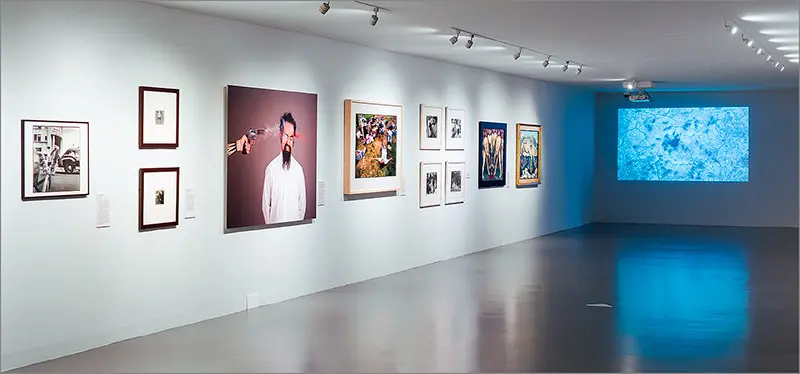
Gallery