ExhibitionFebruary 19, 2026
Alberto Greco: Viva el arte vivo
The exhibition 'Viva el arte vivo,' held at the Museo Reina Sofía in Madrid, centers on Alberto Greco’s (Buenos Aires, 1931 - Barcelona, 1965) radical concept of live art. It documents his short yet intense artistic career. Greco’s life and work were defined by actions inseparable from his migratory path. This path led him from Buenos Aires to the Atacama Puna and Humahuaca, and then to Paris, Rio de Janeiro, São Paulo, Genoa, Rome, Madrid, Piedralaves, New York, Ibiza, and Barcelona. The exhibition brings together works from 1949 to 1965, tracing his development from early writings and informalist paintings—where he pushed the boundaries of matter—to influential live art actions and objets vivants, followed by Madrid drawings, "self-promotion" collages, and finally, the novel 'Besos brujos,' created shortly before his death.
Alberto Greco was a key figure in the experimental avant-garde. His career took an unconventional path, marked more by detours and unpredictability than by a fixed aesthetic program. As an informalist painter, organizer of tombolas and 'rolling exhibitions,' and occasional poet and actor, he also acted as a queer flâneur and founder of live art. Through these roles, Greco transformed his public life into a space for aesthetic innovation, balancing theatricality, media spectacle, and street culture.
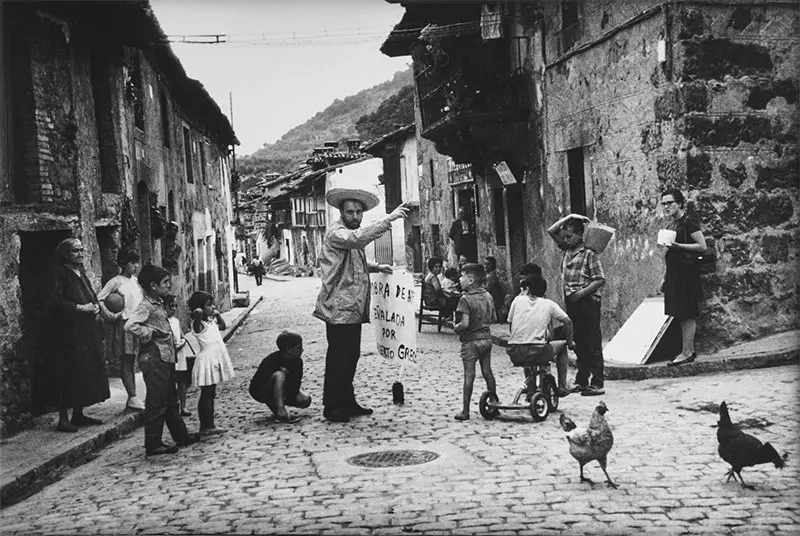
Building on his reputation, in March 1962, Greco founded live art in Paris, using the passing nature of life as artistic material. Under the concept of live art, later called 'vivo-dito,' he signed people, markets, and baths; declared Buenos Aires and Piedralaves as works of art; and wrote 'Viva el arte vivo' in chalk on the streets and walls of Rome. In his 'Manifesto dito dell´arte vivo,' which he posted in Genoa, he called for engagement with the living elements of reality: movement, time, people, conversations, smells, rumors, places, and situations. For example, in Madrid, he organized a 'vivo-dito moment' that ended with the burning of a collectively painted canvas. He also created 'incorporations of characters into the canvas' by tracing the silhouettes of real models onto large canvases. Greco arrived in Madrid in 1963 and, except for brief periods, remained in Spain until his death two years later.
Greco’s live art also included drawings and collages. These works blended popular culture with references to mass media and emotional tones. Elements such as childishness, sentimentality, and camp often appeared. Many featured writing to capture bodily intensity, daily experiences, and the artist’s movement through the city. Thus, street life, festivals, readymades, religious events, pop montages, and personal notes all intersected in his art, creating a layered expression of his surroundings and emotions.
For Greco, live art established his legacy as an art of the future. He envisioned it not as a structured program but as an unpredictable adventure in which art and life—with all their movement, transformation, interruptions, and excesses—were meant to fully merge. This is the central focus of the retrospective.
Alberto Greco was a key figure in the experimental avant-garde. His career took an unconventional path, marked more by detours and unpredictability than by a fixed aesthetic program. As an informalist painter, organizer of tombolas and 'rolling exhibitions,' and occasional poet and actor, he also acted as a queer flâneur and founder of live art. Through these roles, Greco transformed his public life into a space for aesthetic innovation, balancing theatricality, media spectacle, and street culture.
Building on his reputation, in March 1962, Greco founded live art in Paris, using the passing nature of life as artistic material. Under the concept of live art, later called 'vivo-dito,' he signed people, markets, and baths; declared Buenos Aires and Piedralaves as works of art; and wrote 'Viva el arte vivo' in chalk on the streets and walls of Rome. In his 'Manifesto dito dell´arte vivo,' which he posted in Genoa, he called for engagement with the living elements of reality: movement, time, people, conversations, smells, rumors, places, and situations. For example, in Madrid, he organized a 'vivo-dito moment' that ended with the burning of a collectively painted canvas. He also created 'incorporations of characters into the canvas' by tracing the silhouettes of real models onto large canvases. Greco arrived in Madrid in 1963 and, except for brief periods, remained in Spain until his death two years later.
Greco’s live art also included drawings and collages. These works blended popular culture with references to mass media and emotional tones. Elements such as childishness, sentimentality, and camp often appeared. Many featured writing to capture bodily intensity, daily experiences, and the artist’s movement through the city. Thus, street life, festivals, readymades, religious events, pop montages, and personal notes all intersected in his art, creating a layered expression of his surroundings and emotions.
For Greco, live art established his legacy as an art of the future. He envisioned it not as a structured program but as an unpredictable adventure in which art and life—with all their movement, transformation, interruptions, and excesses—were meant to fully merge. This is the central focus of the retrospective.