ExhibitionApril 26, 2019
Adriana Varejão: Traveling Retrospective Exhibition in Brazil
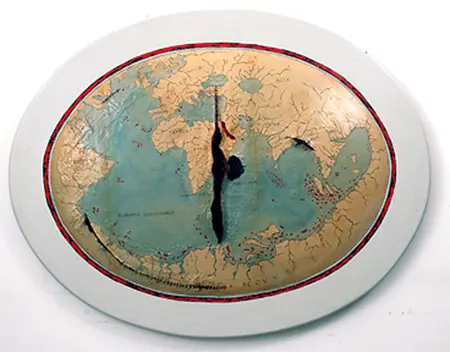
Adriana Varejão presents an important set of her work in an itinerant exhibition: "Adriana Varejão-For a cannibalistic rhetoric". The first exhibition is at the Museum of Modern Art of Bahia (MAM-BA) in Salvador Bahia, on view until June 15th with free admission. The intention is to make traveling exhibitions with the purpose of democratizing the art and taking it through Brazilian cities different from Rio de Janeiro and São Paulo. The exhibition, curated by Luisa Duarte, seeks to approach the artist's production. 20 significant works of her artistic career of more than 30 years are presented and includes seminal works such as Mapa de Lopo Homem II" (1992-2004), "Quadro Ferido" (1992) and "Proposta para uma Catequese", in its parts I and II (1993). Throughout the exhibition works from almost all the series produced by the artist are included, such as: "Terra Incognita", "Proposal for a Catechesis", "Academics", "Languages and Courts", "Ruins of Charques" and " Dishes". Short texts describe the work to contextualize them. The title of the exhibition seeks to highlight alternative stories, almost hidden because they are not part of the "official" story, and refers to the link between the work of Adriana Varejão and the Baroque tradition. Rhetoric is a recurring baroque strategy. If the persuasive discourses of that time turned in favor of the Christian narrative and the project of European colonization, the cannibal rhetoric of the work is its antithesis. It is a break with the modern Western forms of thought and action, in search of local knowledge, as the legacy of anthropophagy. Varejão affirms that for the construction of her work, Salvador and Cachoeira are fundamental cities. "In those cities, I found very important references of the Baroque period that I have used in many of my works, especially in those that refer to the tile." "The cloister of the Convent of San Francisco, the Pelourinho, and the Church Ordem Terceira do Carmo, in Cachoeira, in addition to an endless number of relics such as Indian crockery and Chinese-style ceiling painted by Charles Belleville at the Seminary of Our Lady of Bethlehem; they offered me elements for the construction of many of my works that, for the first time, will be presented here". This exhibition, concludes the artist, "is like finally returning to the mother's house after a long trip".
Gallery