Art NotesFebruary 10, 2017
Adolfo Best-Maugard: The Spiral of Art
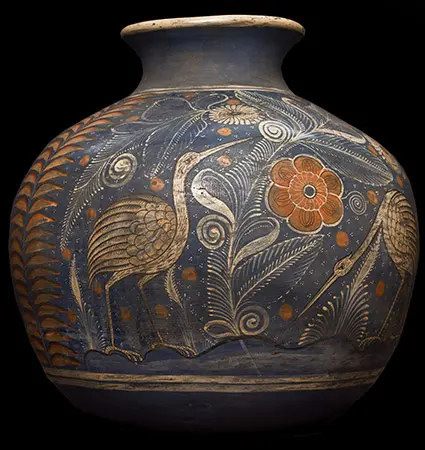
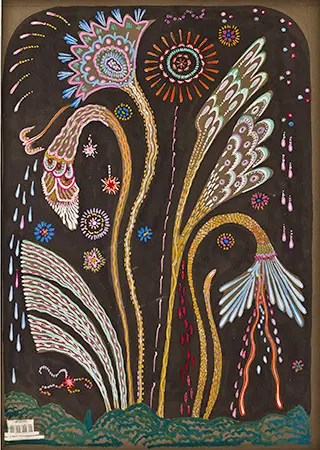
Initially presented at the Centro Cultural Jardín Borda in Cuernavaca, Morelos, the retrospective exhibition titled "Adolfo Best-Maugard: The Spiral of Art" was also on display from early September to early December, 2016, at the Museo Palacio de Bellas Artes in Mexico City. The first ever retrospective of the work by Best-Maugard, it was the result of the collaboration between the Ministries of Culture of Mexico and of the State of Morelos. Early on in his artistic career, Adolfo Best-Maugard (1891-1964) produced easel-mounted landscape paintings. In addition to his work as a painter, he also made important contributions to the fields of visual arts education, dance scenography, filmmaking, and philosophy. The exhibition explored two lines of reflection: the function of art through the social role played by Best-Maugard in the national cultural construction of the artistic Mexicanist movement that reclaimed popular tradition and identity; and the analysis of the general production and the aesthetic and educational explorations by this artist, inventor, and theoretician. The first thematic center: The Natural Landscape and he "Mexican Character" addresses the production by Best-Maugard in Mexico and Spain between 1909 and 1920, his relationship with Gerardo Murillo (aka Dr. Atl)—and the exhibition of Mexican artists organized by Murillo in the context of the centennial celebrations of the Mexican independence—as well as activities at the Escuela Nacional de Bellas Artes. A second thematic center addresses the method of Mexican drawing championed by Best-Maugard and its exploration—between 1917 and 1924—by other artists from his generation; following Best-Maugard's postulation of 7 emblematic formal motifs present in pre-Columbian and indigenous manifestations to recreate a cultural production with them that explored the Mexican identity. The retrospective also developed a third section focused on the role played by the author in the connection between cultural nationalism and the visual arts between 1920 and 1930. Those two themes include works from special collections at the Museo Nacional de Arte of the Instituto Nacional de Bellas Artes, and from private collections in Mexico City—like Fomento Cultural Grupo Salinas or the Carlos Monsiváis Collection at the Museo del Estanquillo. These materials that brought together under the same roof works by Best-Maugard and by his contemporaries—including proposals by important artists like Lola Cueto, Manuel Rodríguez-Lozano, Roberto Montenegro, Miguel Covarrubias, and Julio Castellanos—established relevant reflective associations between Mexican identities and the way these are represented in the artists' proposals, as well as the parallelisms of the sensitive experience unfolding in folk art pieces and in those creators' representations of the experimental treatments of motifs by Best-Maugard. In its two final sections, the exhibition also addressed Best-Maugard's relationship with cinema from 1931 and 1937, period in which he produced the critical short film titled Humanidad (Humanity, 1934) and the feature film La Mancha de Sangre (The Blood Stain, 1937), and his final pictorial phase (1951-1964) in which he explored portraiture through the lyrical handling of the characters features in his works from that period.
Gallery