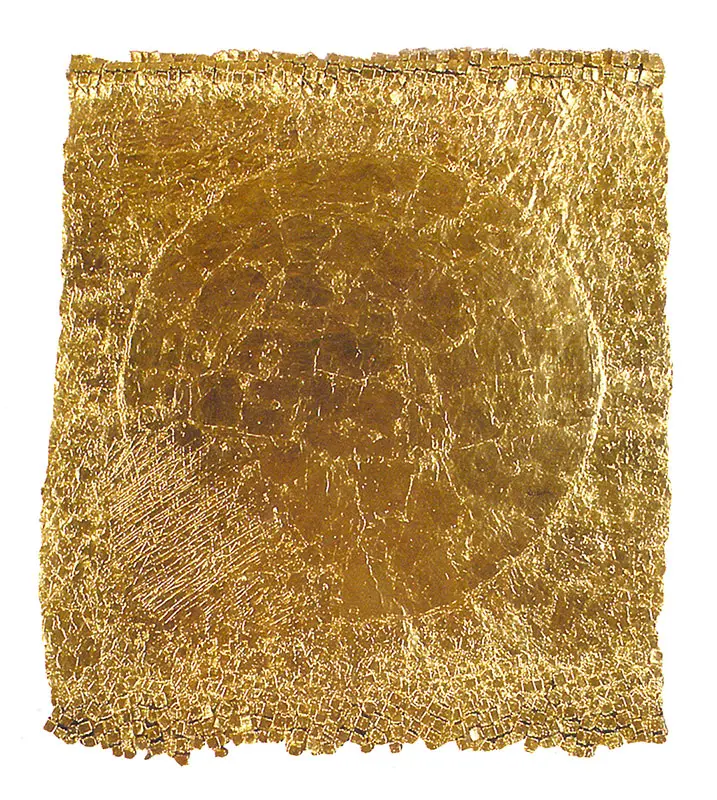
After a prolonged absence,1 Olga de Amaral presented a monumental exhibition of textiles at the Museum of Modern Art of Bogota, sponsored by Seguros Skandia, which covered the “four periods” that are woven together in her creative process as a whole. It is clear that the weft, warp, and fiber—essential elements in the elaboration of her textiles —form the conceptual basis of her research, which reflects both a refined sensibility and a sense of arduous discipline.
This exhibition clarified how the techniques and materials used by the artist lead to the construction and development of a language, since each of her periods is preceded by intentions of a conceptual and expressive kind that make her tapestries intensely meaningful surfaces, as Galaor Carbonell showed in his book entitled Olga de Amaral, Desarrollo del lenguaje.2 Three objectives can be identified: a geometrical intention, characteristic of her production in the 1960s; an expressive intention, reflected in a good deal of her work from the 1970s; and finally, a reflective intention, from the 1980s up to the present.