Dec 2007 - Feb 2008
artnexus #67
Arte in Colombia #113
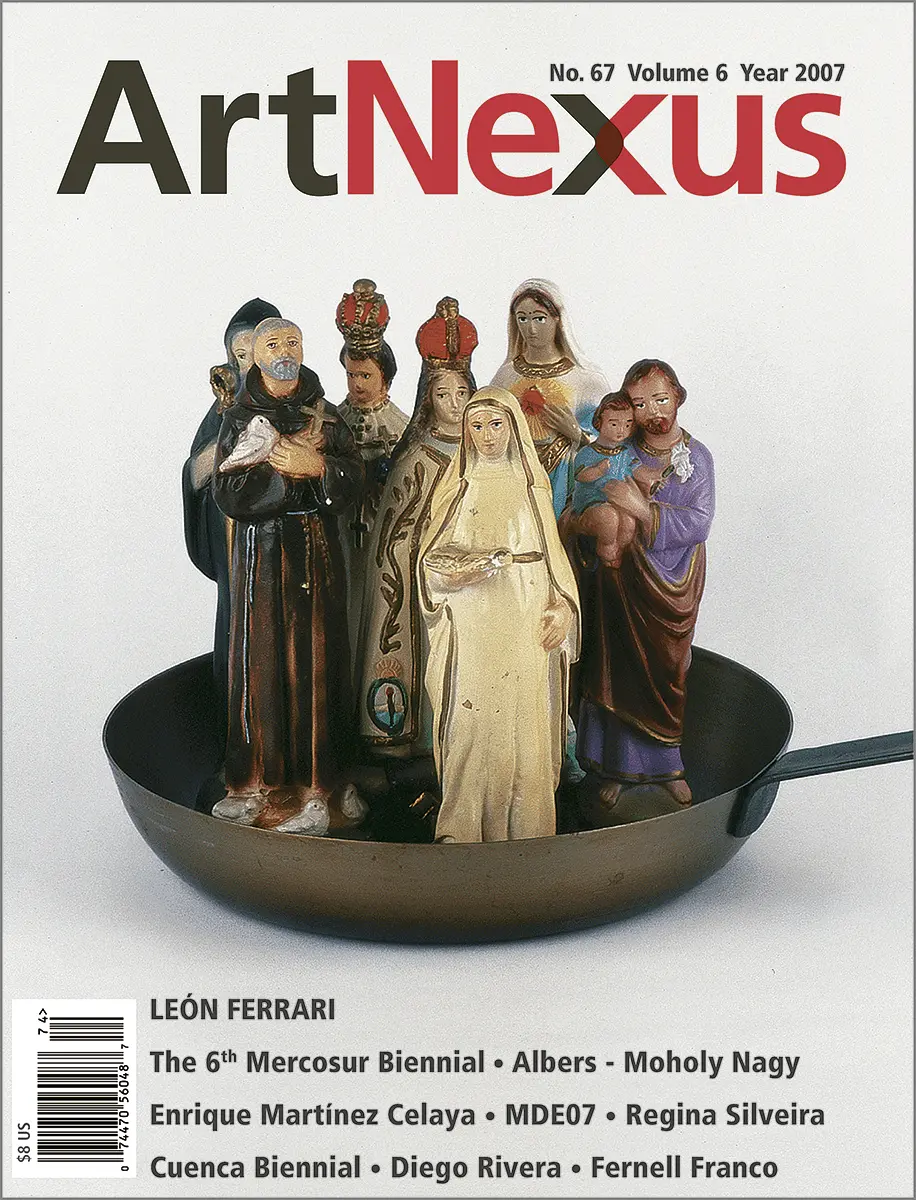
When the Argentinean curator Victoria Noorthoorn, who took part in the presentation of León Ferrari (Buenos Aires, 1920) in the Venice Biennale, learned that the artist received the Golden Lion, she comented: “[…] this is not only a reward for his career achievements, the sustained experimental practice over the years and the confrontation of adverse circumstances, but also a prize for freedom of expression in our country.” This statement is more than accurate: if anything has distinguished Ferrari throughout his long, prolific career, it is the permanent defense of his convictions, despite any trouble they might cause for him. Ferrari’s position regarding “Western and Christian” religion, for instance, is a central theme in his work, and it has resulted in multiple acts of censorship against him. Let us just remember the banning in 1965 of La civilización occidental y cristiana during the Di Tella Award, under the excuse that it could hurt the religious sensibilities of workers in the Di Tella Institute.
From his beginnings in the art world around 1955 to the present, using a uniquely personal artistic language, with controversial proposals, Ferrari experimented both in abstraction and figuration, deploying such varied techniques as sculpture, drawing, painting, photography, collage, and installation, as well as materials like wood, plaster, clay, and stainless steel wire, with which he created refined sculptures.
All this activity in the art world is complemented by his texts, be it poetry, journalism, and essays on the role of art and of the artist.
IVONNE PINI
IVONNE PINI
Issue Number: 67
Arte in Colombia: #113
Period: Dec 2007 - Feb 2008
You have 4 free articles remaining. Sign up for unlimited access.