Apr 1999 - Jun 1999
artnexus #32
Arte in Colombia #78
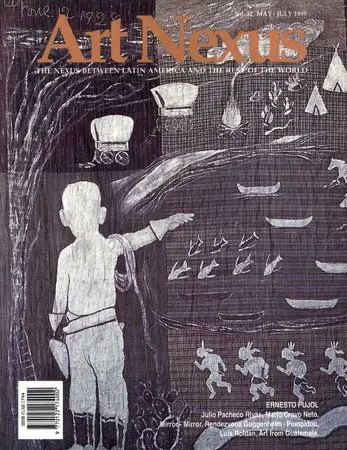
Ernesto Pujol was born in Cuba in 1957 and taken to Porto Rico at the age of four. He studied and lived there until 1970, when he moved to the United States —first to Miami and South Carolina and then to New York.
Concepts such as memory and exile appear persistently in his work. "Memory is our only heritage, the only thing you can take with you and which defines you. Sometimes, memory is the only weapon of defence for an individual faced with a hostile present and an uncertain future. And so it is is exile, uprooting and diaspora which make memory so important for me as an artist and as a person."1
The particularity of this memory lies in the fact that Pujol lived and experienced exile as a child. His imagery refers constantly to children's objects. But these are neither inoffensive nor nostalgic memories: they are tools for exploring and reflecting on exile, racial and gender identities. Works such as April 12, 1928 (1997), The Children of Peter Pan (Havana, 1995), Saturn's Table (Havana, 1996), Cowboys and Indians (Porto Rico, 1997) bring us face to face with a questioning of persistent interpretations, formed since childhood, about such concepts as masculinity, race and cultural models.
Despite the violence underlying his themes, Pujol offers the spectator an unusual way of exploring objects: his intention is not to impress at first sight, but to draw the spectator subtly towards a generally painful reflection.
1. ”La tritogía cubana de Ernesto Pujol: el exilio, la memoria y el regreso. Una conversation con Octavio Zaya," in Atlantica, no. 15, Winter 1996. p.127.
IVONNE PINI
Issue Number: 32
Arte in Colombia: #78
Period: Apr 1999 - Jun 1999
You have 4 free articles remaining. Sign up for unlimited access.